Sachsenhof, Folk museum along Ems River in Greven, Germany
The Sachsenhof is a reconstruction of an early medieval Saxon farmstead on the high bank of the Ems in Greven-Pentrup. Its centrepiece is an 18-metre-long post-built main house with ship-shaped curved long walls, slanted outer posts and a reed-covered hipped roof; the walls are woven from willow and coated with clay. A sunken-floored workshop, a barn and a hay shed with a vertically sliding roof complete the farm.
Archaeological digs in 1973 at Münster-Gittrup uncovered traces of early medieval Saxon settlements in the region. These discoveries led to the museum's creation in 1983 as a way to show and preserve what researchers learned from the excavations.
The main house is a post-built dwelling about 18 metres long with ship-curved long walls, slanted outer posts and a roof of reed that overhangs to keep the clay walls and fire-hardened oak posts dry. Its walls are woven from willow and coated with clay. The Grubenhaus, sunk up to a metre into the ground, served as a workshop; loom traces, clay loom weights and spindle whorls show textile work there.
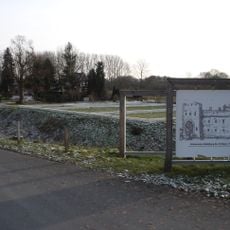
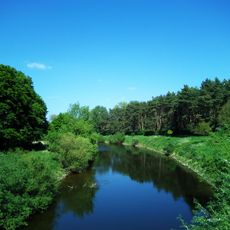
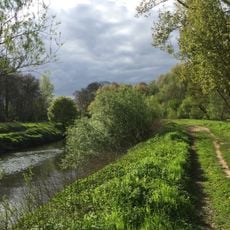
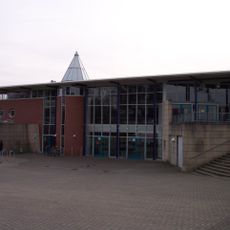
The site lies on the high bank of the Ems in Greven-Pentrup and is a stop on the Emsradweg cycle route, so it is reached on foot or by bicycle. The grounds are open-air with reconstructed buildings and a garden; the Sachsenhof-Zentrum, opened in September 2021, holds a seminar room, magazine, tea kitchen and sanitary facilities. Visitors can join seasonal work such as sowing, harvest and building maintenance outside event days.
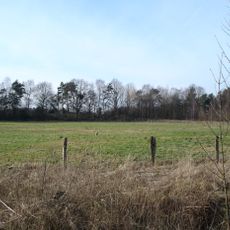
The museum actively farms its fields using methods from the Middle Ages, growing grains and herbs the way people did centuries ago. This hands-on approach lets visitors see real agriculture in action rather than just buildings and reconstructions.
The community of curious travelers
AroundUs brings together thousands of curated places, local tips, and hidden gems, enriched daily by 94,137 contributors worldwide.