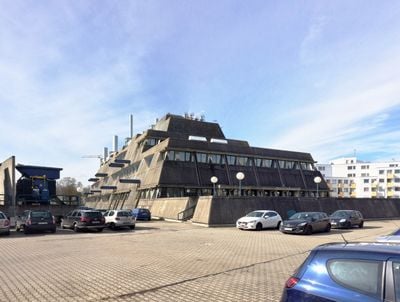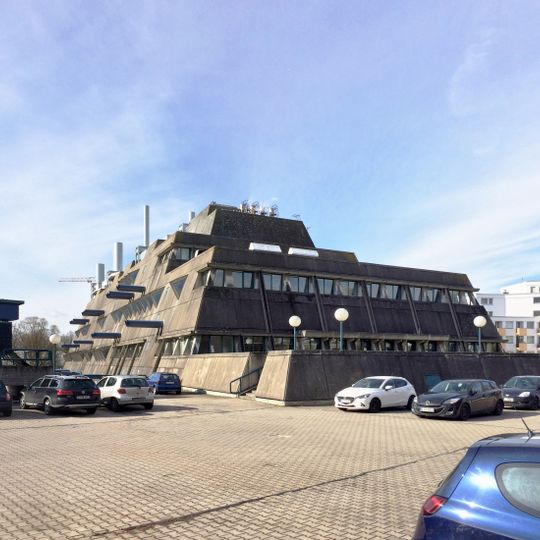
Forschungseinrichtung für experimentelle Medizin, Research laboratory in Lichterfelde, Germany.
This laboratory is a six-story concrete building in Lichterfelde that features large blue ventilation ducts running along its exterior walls. The interior layout alternates between standard laboratory floors and taller technical levels, creating a functional rhythm designed to support the building's ventilation needs.
Construction of the facility started in 1971 according to designs by architect Gerd Hänska and reached completion ten years later. The extended timeline reflects the technical challenges involved in building a highly specialized medical research structure during that period.
Locals call this building the Mouse Bunker, a name that stuck because of its angular concrete form and its past role as a facility for laboratory animals. The bright blue ventilation pipes that run along the facade have become a recognizable symbol, turning a functional element into a defining feature of the structure.
Every second floor functions as a technical level with extra ceiling height to house the extensive ventilation system. This arrangement makes maintenance easier and ensures steady air circulation throughout the laboratory spaces.
The exposed technical infrastructure on the exterior is an unusual design choice, as most laboratory buildings from that era kept such elements hidden inside. This open approach not only simplifies repairs but also makes the functional demands of a high-level research facility visible to anyone passing by.
The community of curious travelers
AroundUs brings together thousands of curated places, local tips, and hidden gems, enriched daily by 92,641 contributors worldwide.