Fosa común de Kilianstädten, Mass grave and archaeological site in Schöneck-Kilianstädten, Germany.
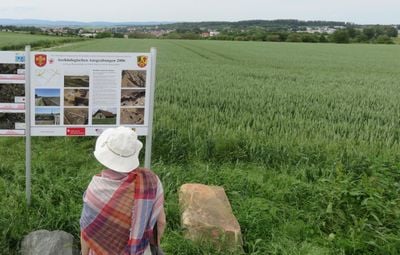
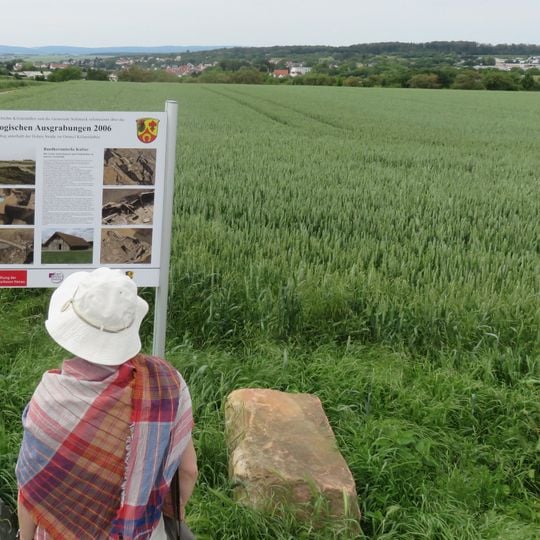
The Massacre of Kilianstädten is a Neolithic mass grave in the Kilianstädten district of Schöneck, Main-Kinzig-Kreis. The bones lay in a V-shaped pit 30 to 100 centimetres wide and 7.50 metres long, probably part of a two-hectare ditch system. The spot is now covered by a bridge abutment over the L 3008, beside which stands an information board with excavation photographs.
The burial dates back roughly 7000 years and connects to the Linearbandkeramik culture, an early farming society of the Neolithic period. The nature of injuries on the skeletons points to a violent end for the entire group.
The name Kilianstädten comes from Saint Kilian, the local patron saint, and the Old German suffix for settlement, but the grave itself is about 7000 years old. The information board at the edge of the field, headed "...ogischen Ausgrabungen 2006", shows four captioned photographs of the excavation trenches and skeletons under the heading "Bandkeramische Körper".
The grave lay beneath what is now the bridge abutment over the L 3008 on the built-up side of Kilianstädten, near the Neuer Weg road; the excavation itself was a rescue dig, so only the main features were documented. A white information board on a metal post at the edge of a green field carries German text headed "...ogischen Ausgrabungen 2006", with four captioned photographs of trenches and skeletons and the heading "Bandkeramische Körper". No remains are visible in the ground.
Examination revealed that no individuals between the ages of 9 and 15 were found, a gap that raises questions about the composition of the group. The skeletons also show injury patterns that suggest targeted acts of violence.
The community of curious travelers
AroundUs brings together thousands of curated places, local tips, and hidden gems, enriched daily by 92,785 contributors worldwide.