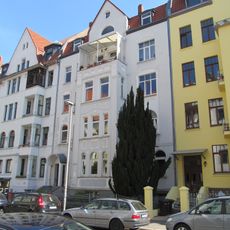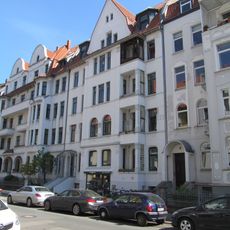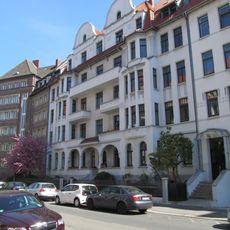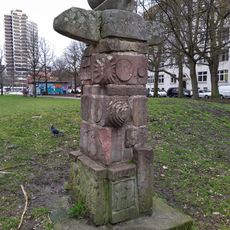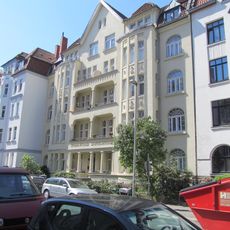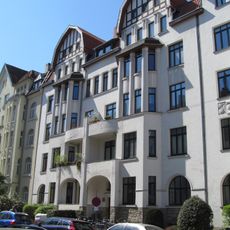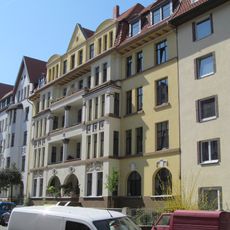
Küchengarten buildings, Architectural heritage monument in Linden-Limmer, Germany.
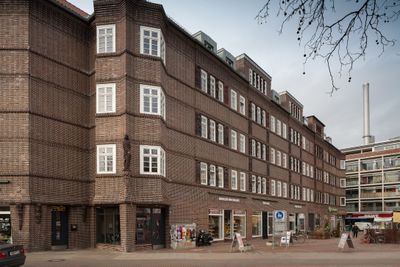
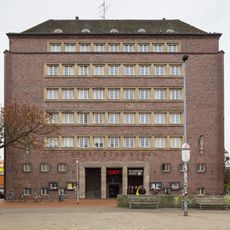
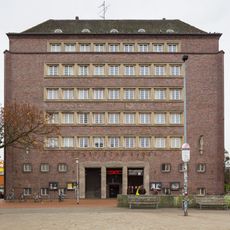
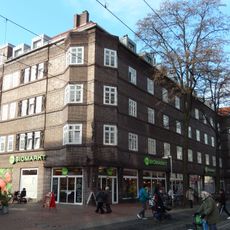
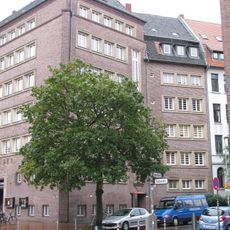
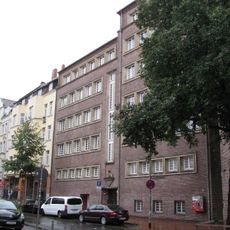
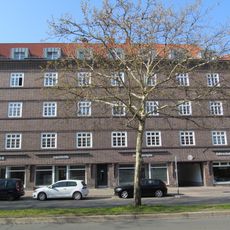
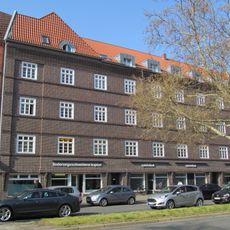
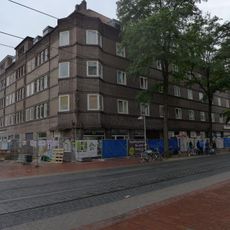
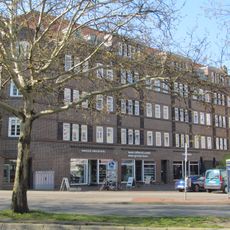
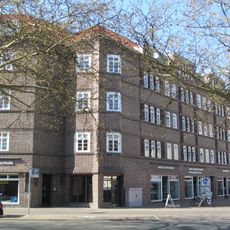
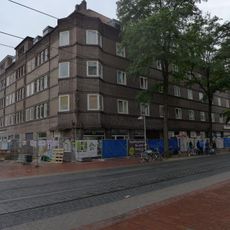
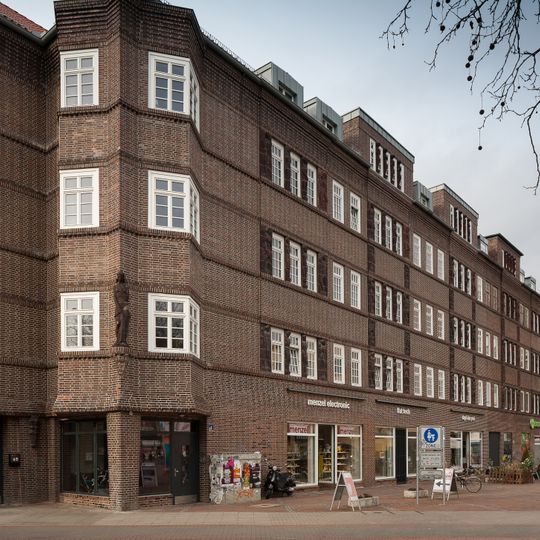
The Kaufhaus am Küchengarten is a four-storey clinker-brick complex completed in 1927, closing the trapezoidal block between Selma, Limmer and Fössestraße at the Am Küchengarten square. Its main facade at Fössestraße 4–6 has five bays of triple windows, keel-shaped oriels, box dormers and figurative relief panels, possibly by sculptor Ludwig Vierthaler; the plainer Limmerstraße and Fössestraße 8–12 fronts are divided by horizontal lines.
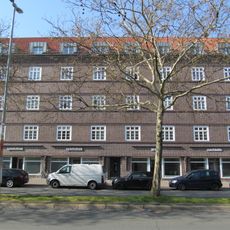
Friedrich Hartjenstein built these buildings in 1927, creating an example of architecture after World War I. The complex arose during a time when Hanover was renewing its urban structure and experimenting with new housing forms.
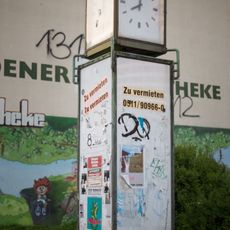
The name "Kaufhaus am Küchengarten" survives on a clinker-brick building at neighbouring Limmerstraße 1, still visible in 1950s photographs. The square's older furniture includes a standard clock put up around 1927 after a design by Karl Elkart. The relief panels on the main facade are possibly the work of sculptor Ludwig Vierthaler.
The complex closes the trapezoidal block between Fössestraße, Limmerstraße and Selmastraße at the Am Küchengarten square. The main facade at Fössestraße 4–6 is partly hidden by buildings placed in front of it, so its reliefs and twin and triple windows only become visible up close. The square also holds a Normaluhr clock of about 1927 designed by Karl Elkart.
The relief panels on the main facade at Fössestraße 4–6 may be the work of sculptor Ludwig Vierthaler. The nearly symmetrical section is detailed with keel-shaped oriels, box-shaped dormers and triple windows set just above the string course. Much of this ornament is hidden by later buildings placed in front and only becomes visible up close.
The community of curious travelers
AroundUs brings together thousands of curated places, local tips, and hidden gems, enriched daily by 93,134 contributors worldwide.