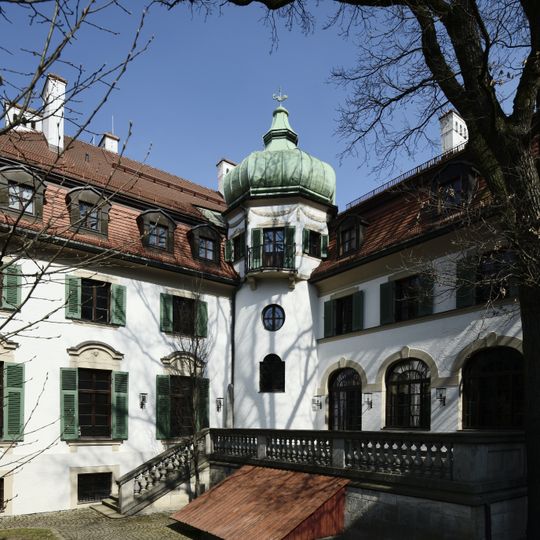
Hildebrandhaus, Architectural heritage monument in Munich, Germany.
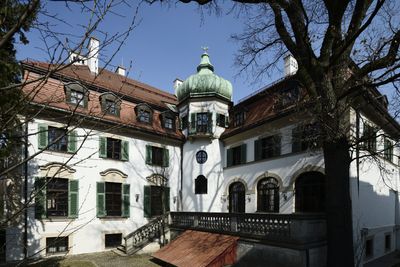
The Hildebrandhaus is a T-shaped artist villa built in 1898, with a white stucco facade, green shutters and a red tiled roof. A central octagonal tower with a green copper onion dome and cross finial rises three stories. A stone balustrade terrace extends in front, and a glass annex added in 2013–2016 projects from the east wing.
Adolf von Hildebrand had the villa built in 1898 to his own plans, with Gabriel von Seidl as builder, and it stayed in his family until 1934. It was seized under the Nazi regime in 1941, then passed to the American military government and later the Evangelical Lutheran Church in Bavaria. Between 1967 and 1974 demolition was planned; monument protection saved it, and since 1977 it has housed the Monacensia literature archive.
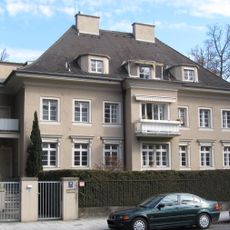
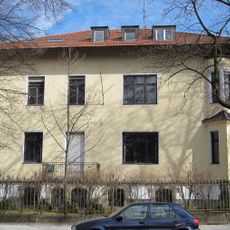
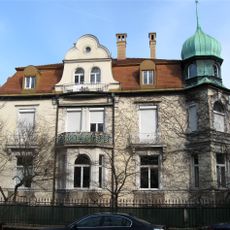
The house bears the name of a notable artist and reflects Munich's artistic heritage. Its facade shows the care for crafted details that remains visible throughout the neighborhood today.
The Hildebrandhaus stands at Maria-Theresia-Straße 23 in Bogenhausen, on the high bank of the Isar by the Maximiliansanlagen. The entrance is on the north side through a modest door with a small canopy; a wooden ramp leads to the terrace. Since 1977 the building has housed the Monacensia literature archive, whose library, reading room and exhibitions are open to visitors.
The house's name comes from a notable 19th-century artist and sculptor who worked in Munich. This connection to art history makes it a special testament to the city's cultural flourishing during that era.
The community of curious travelers
AroundUs brings together thousands of curated places, local tips, and hidden gems, enriched daily by 94,651 contributors worldwide.