Mesolithischer Bestattungsplatz von Groß Fredenwalde, Mesolithic cemetery in Gerswalde, Germany
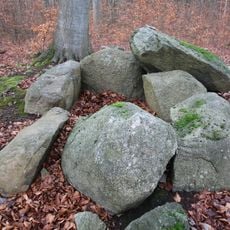
The Mesolithic burial site of Groß Fredenwalde is an archaeological location in northeastern Germany containing multiple stone age graves. Around twelve individuals were discovered here along with flint tools, bone items, and other artifacts from that remote period.
The cemetery was used from about 6400 to 4900 BC, making it the oldest known burial ground in Germany and Central Europe. It was found by chance in 1962 during excavation of a building pit on the summit of the Weinberg; six skeletons were recovered. Radiocarbon dating followed in 1992, and new excavations from 2012 under archaeologist Thomas Terberger revealed the site's importance.
The dead were laid to rest with red ochre and grave goods such as bone awls, flint blades and perforated animal-tooth pendants strung on a band, showing links to northern Europe. One infant buried around 6400 BC was strewn with ochre, and a young man was placed upright in an open pit that was later filled and covered with a fire.
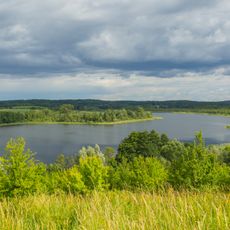
The site is located about 80 kilometers northeast of Berlin and now serves as a research area for archaeologists. To understand the exposed finds and their importance for stone age studies, visitors should check access conditions before planning a trip.
The upright burial at Groß Fredenwalde has no parallel in Central Europe. Comparable 45-degree positions are known only from Zvejnieki in Latvia and Oleni Ostrov in Russia, not from Karelia. The man, about 25 years old and roughly 156 cm tall, was placed standing in an open pit around 5000 BC; after the body decayed, the pit was filled and a fire lit over it.
The community of curious travelers
AroundUs brings together thousands of curated places, local tips, and hidden gems, enriched daily by 94,593 contributors worldwide.