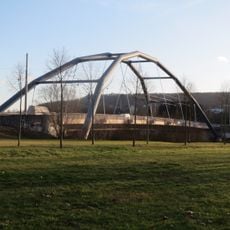
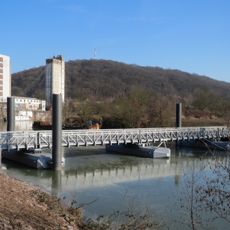
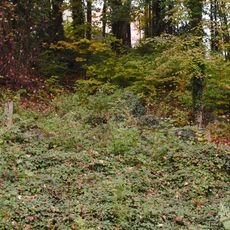
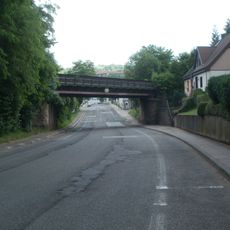
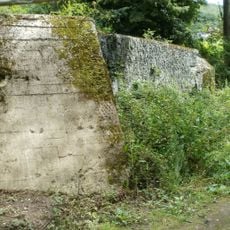
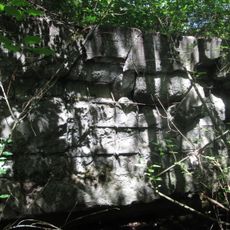
Römerkastell Saarbrücken, Roman fort in Saarbrücken, Germany.
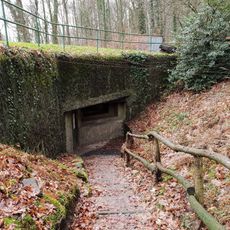
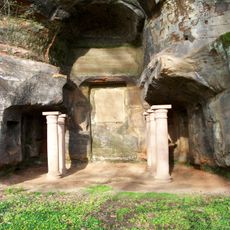
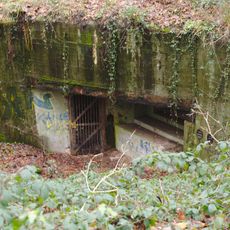
Römerkastell Saarbrücken is a late Roman fortress in the St. Johann district, in a small park on the street An der Römerbrücke. Its 0.66-hectare plan combines a rectangle in the southwest with an attached trapezoid in the northeast; four round corner towers of the front section, 6.4 to 6.8 m across, were uncovered. The wall core was Opus caementicium faced with sandstone in Opus spicatum, and the foundations reach about 2 m below today's ground.
The fort was discovered in 1924 during construction work, when conservator Carl Klein uncovered and largely excavated its foundations. Further digs followed in 1927, 1932 and 1962, but the pre-war documentation was lost in a World War II bombing raid. The site lies on the road from Metz to Worms, which ran through the fort itself.
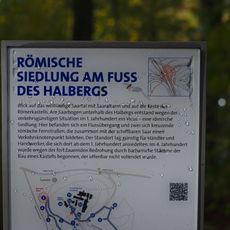
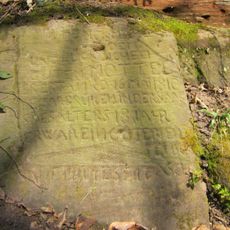
The name Vicus Saravus is documented by a milestone inscribed "vico saravo", found near the settlement that grew at the foot of the Halberg. The Roman highway from Metz to Worms ran straight through the fort, its surface a 12 cm layer of small limestone slabs edged with dressed limestone, although local sandstone was used outside the walls. Visitors can see the excavated roadbed just 30 to 40 cm below today's ground.
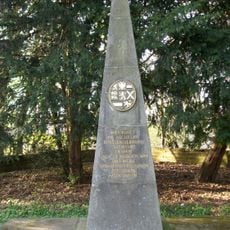
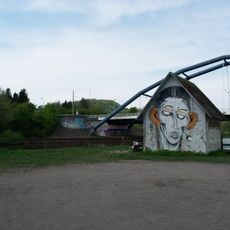
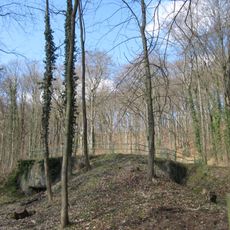
The remains are located in a small park that is easily accessible by public transport. The site is open to visitors and provides space to explore the archaeological remains.
The 2009 excavation near the Osthafen, just outside the fort, found a section of the Roman road from Divodurum (Metz) to Borbetomagus (Worms). Inside the fort this road lay only 30 to 40 cm below today's ground and was edged with dressed limestone.
The community of curious travelers
AroundUs brings together thousands of curated places, local tips, and hidden gems, enriched daily by 94,346 contributors worldwide.