Lenbachmuseum, Artist museum in Schrobenhausen, Germany
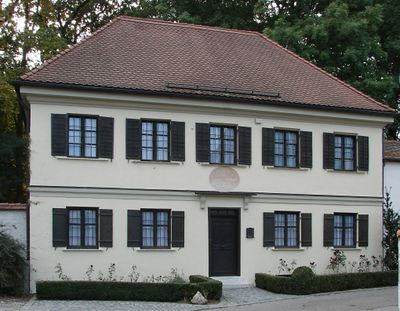
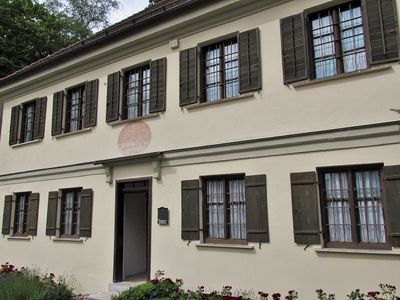
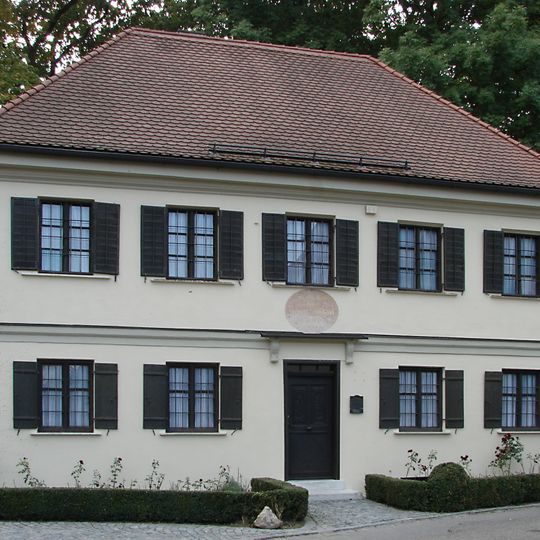
The Lenbachmuseum occupies the two-storey Biedermeier house built in 1823 by Franz Joseph Lenbach, father of painter Franz von Lenbach, in the southwest of Schrobenhausen's old town. Its pale cream facade has four shuttered windows on each floor, a dark double door at centre-right and a hipped roof of reddish-brown tiles. Inside, two rooms serve special exhibitions and a media station covers the collection.
The building dates from the 1820s and was originally constructed as a private residence before being later repurposed as an art museum. Its transformation into a public cultural institution happened in the first half of the 20th century and continues to shape the building's use today.
The museum displays works by artists connected to the region and shows how different artistic movements developed in Germany. Visitors can see how various styles and techniques are presented alongside each other, reflecting the artistic preferences of particular periods.
The museum reopened in April 2016 after renovation work that modernised heating and lighting and enlarged the hanging space with wall panels. Two rooms are now kept for temporary exhibitions, and a media station covers the artist and the collection, including works not on display. Further paintings can be seen on guided tours of the Lenbachsaal in Schrobenhausen's town hall.
The museum opened on 11 December 1937 after Lenbach's widow Lolo bought the house back at a forced auction in October 1936 and gave it, with around 500 paintings, sketches, drawings and papers, to a foundation created for the purpose. Among the exhibits is a Roman marble torso of a youth from the late first century, a copy after a Greek original that Lenbach probably acquired in Rome for his Munich villa.
The community of curious travelers
AroundUs brings together thousands of curated places, local tips, and hidden gems, enriched daily by 92,742 contributors worldwide.