Astronomische Uhr, Paulusdom, Münster, Astronomical clock in St. Paulus Cathedral, Münster, Germany
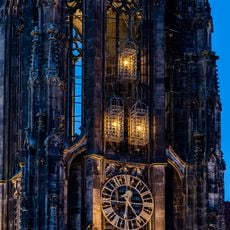
The Astronomical Clock in St. Paulus Cathedral is a mechanical instrument with a dial rotating counterclockwise to track the sun's path, featuring seven hands that indicate planetary positions according to the Ptolemaic system. The mechanism operates through gears, rollers, and elaborately painted discs that represent the complete movement of the heavens.
The clock was built between 1540 and 1542 by printer Dietrich Tzwyvel, Franciscan Johann von Aachen, and locksmith Nikolaus Windemaker, replacing an earlier instrument destroyed in 1534. This reconstruction came after a period of destruction and restored the cathedral's astronomical function.
At noon a golden star appears before the figures of Mary and the Christ child, then the right door opens and metal figures of the Three Kings emerge, bow and leave through the left door, accompanied by two wooden servants. The chimes play "In dulci jubilo" and "Lobe den Herren" during the procession.
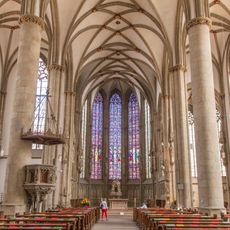
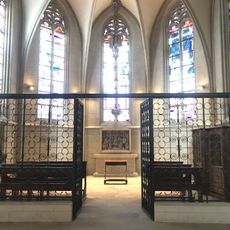
The clock hangs in a vault between the high choir and the south arm of the ambulatory at the cathedral's east end, so approach from the east end of the interior. The noon Adoration of the Magi sequence runs once a day; the trumpeter sounds the hour and Death strikes his bell each quarter hour. The chimes can be played from the cathedral organ.
The Kalendarium, a perpetual calendar under a late Gothic grille, lists dates from 1540 to 2071. Since the Gregorian reform of 1582, working out Easter and the weekdays from it has been complicated. The dial's spandrels show the Four Evangelists rather than the astronomers found on many other astronomical clocks.
The community of curious travelers
AroundUs brings together thousands of curated places, local tips, and hidden gems, enriched daily by 92,739 contributors worldwide.