Hasefriedhof, Historical cemetery in Osnabrück, Germany
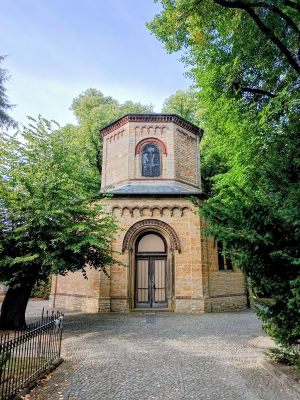
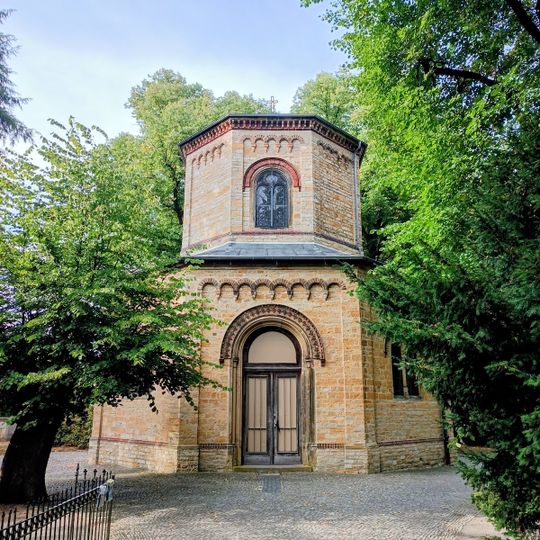
Hasefriedhof is a 10.5-hectare former cemetery in Osnabrück's Sonnenhügel district, named after the Hase river. Its paths pass graves of Osnabrück figures such as mayor Johann Carl Bertram Stüve and politician Anna Siemsen, and an octagonal sandstone chapel built in 1866. A weathered stone statue of a draped figure holding a leafy stem stands beside dense foliage.
In 1777 Justus Möser proposed closing the overcrowded churchyards and creating cemeteries outside the city. After Osnabrück became part of the Kingdom of Westphalia under Jérôme Bonaparte, the inner-city cemeteries were closed on 1 April 1808, and the Hasefriedhof was laid out as the Todtenhof vor dem Hasetore. The first burial was that of jurist and archivist Justus Friedrich August Lodtmann on 21 March 1808.
The cemetery reflects the history of local families and figures resting here, visible through inscriptions and monument styles. Walking through reveals how society in Osnabrück developed over time through the stories marked in stone.
Visitors can walk freely through the grounds as all pathways are clearly marked and easy to navigate. Information materials about notable burial sites and different cemetery sections are available at the entrances.
The cemetery is named after the Hase, the river that runs alongside it. In 2013 the city set up the Stiftung Historisches Bewahren denkmalgeschützter Friedhofskultur to care for the grounds. The grave of Anna Siemsen was damaged by gunfire in 1997 and 1999; no perpetrator was ever identified.
The community of curious travelers
AroundUs brings together thousands of curated places, local tips, and hidden gems, enriched daily by 93,921 contributors worldwide.