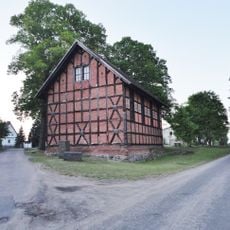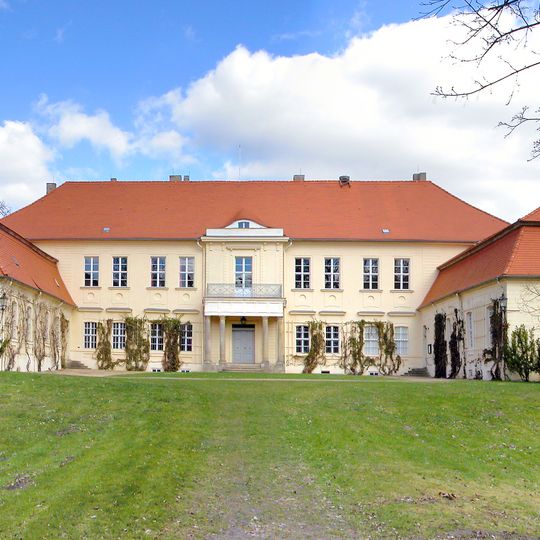
Hoppenrade manor, Manor house in Löwenberger Land, Germany.
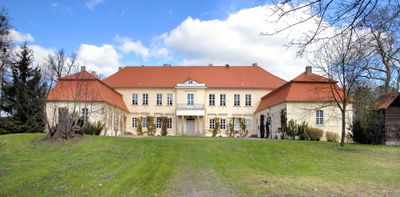
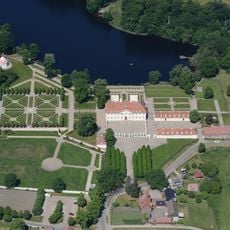
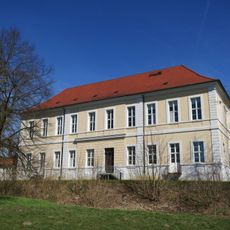
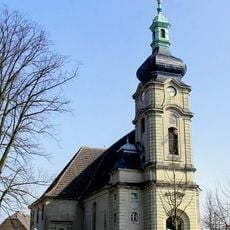
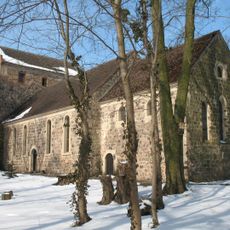
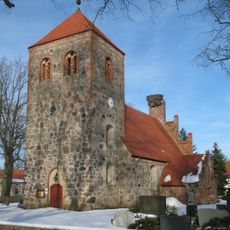
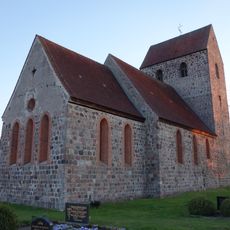
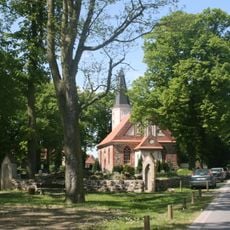
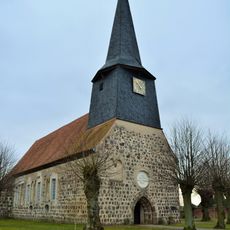
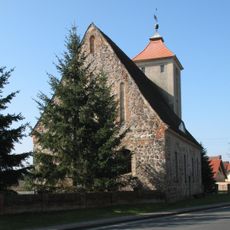
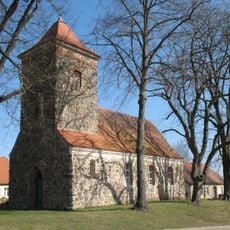
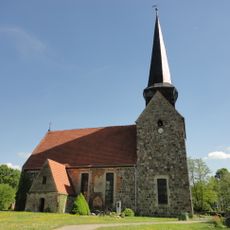
Hoppenrade Manor is a two-storey manor house in Hoppenrade, part of Löwenberger Land in northern Brandenburg. Its present appearance dates from a late-Baroque Neoclassical remodelling around 1800, when the side wings were largely kept and the central block was rebuilt. The main building has a hipped roof, nine window axes on the courtyard side and thirteen on the garden side; the south-east wing holds the former village and patronage church, the other wing served estate purposes. The central block is marked by a single-axis portal projection with balcony and attic.
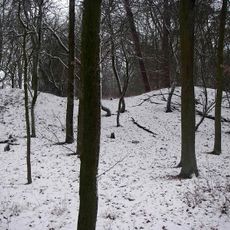
Hoppenrade began as a settlement founded around 1230 and first recorded in 1269 as margravial property. From 1270 to 1460 the bishops of Brandenburg held it, then the von Bredow family until 1788. In 1541 Hans von Bredow built a Vorwerk, converted into a moated castle around 1600, of which rampart remains survive. In 1724 Johann Heinrich von Bredow replaced it with a single-storey three-wing house, and in 1800 Luise Charlotte Henriette von Kraut had the central block rebuilt in late-Baroque classicism, giving the house its present form.
The name Hoppenrade goes back to the village founded around 1230, first documented in 1269. Luise Charlotte Henriette von Kraut, known through Theodor Fontane's book Fünf Schlösser, made the estate a setting for festivities; balls and receptions continued even under French occupation, paid for by felling and selling the estate forests. The southeast wing houses the former village and patronage church.
The manor is a private family residence and not open to the public, so visits are limited to viewing the building from outside. The south-east wing houses the former village and patronage church, while the other wing once served estate purposes. The building stands in the village of Hoppenrade, part of Löwenberger Land, north of Berlin.
The southeast wing houses the former village and patronage church; the opposite wing once served estate purposes. The central section is marked by a single-axis portal riser with balcony and attic. The 1724 three-winged building replaced a moated castle whose rampart remains can still be traced.
The community of curious travelers
AroundUs brings together thousands of curated places, local tips, and hidden gems, enriched daily by 94,471 contributors worldwide.