Schalkholz Passage Grave, Neolithic passage grave in Schalkholz, Germany
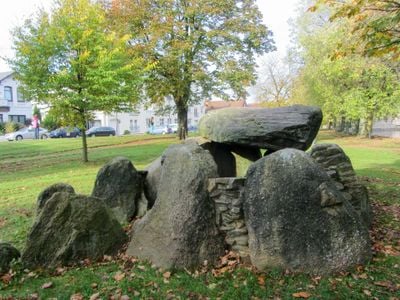
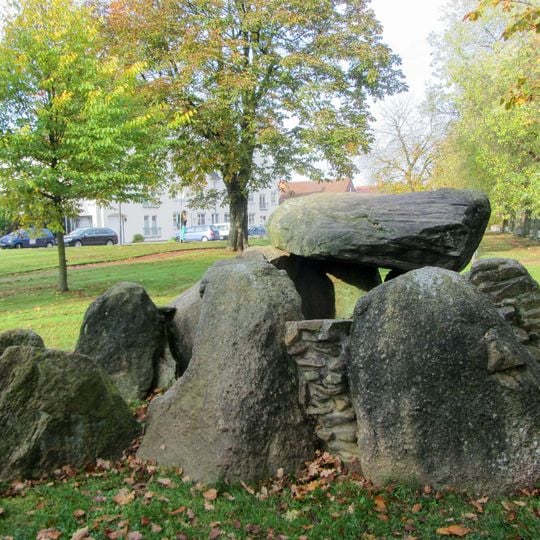
The Schalkholz passage grave is a Neolithic chamber of nine upright wall stones forming an oval about 3.5 m long and 2.2 m wide, with a 1 m entrance passage on the west side. A single flat capstone remains; the second is missing. The chamber now stands in a small green space at the east end of Kreuzberg street in northern Schalkholz, after being returned from Heide in 2021.
The grave was built by the Funnelbeaker culture in the Neolithic period. In 1876 its mound was dug into and partly removed, after which the district council bought and protected the site. Ernst Sprockhoff surveyed it in August 1943, and J. Kühl excavated it in winter 1969/70. The chamber was then moved to Heide and, in July 2021, returned to Schalkholz by the Technisches Hilfswerk.
The burial chamber was filled with clay pots and flint tools that show how early farming communities treated their dead with care and ritual. These objects tell us about the crafts and beliefs that mattered most to the people who lived here.
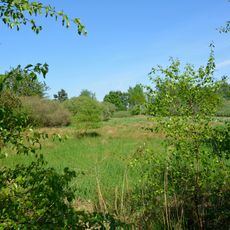
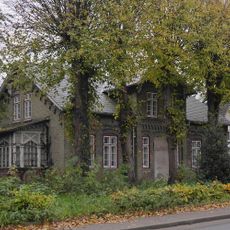
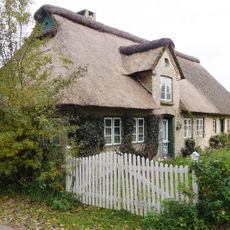
The chamber now stands in a small green space at the eastern end of Kreuzberg street in northern Schalkholz, its original home until 1969/70 and again since July 2021. It is an open-air monument on grass, reached on foot; the surrounding trees and nearby buildings of the village give the orientation.
The chamber was moved twice: in 1969/70 the Bundeswehr helped relocate it about 11 km west-southwest to Heide's Stadtpark, and in July 2021 the Technisches Hilfswerk brought it back to Schalkholz. It now stands in a small green space at the east end of Kreuzberg street.
The community of curious travelers
AroundUs brings together thousands of curated places, local tips, and hidden gems, enriched daily by 94,094 contributors worldwide.