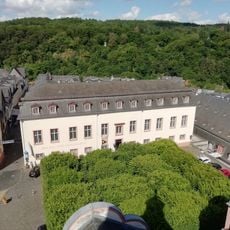
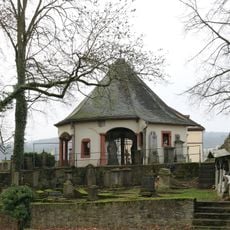
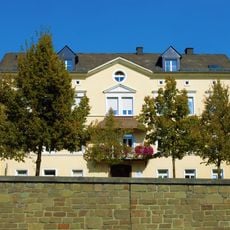
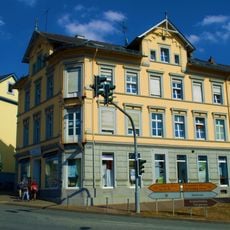
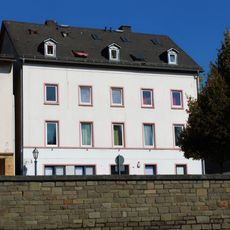
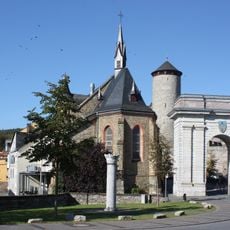
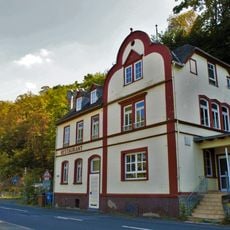
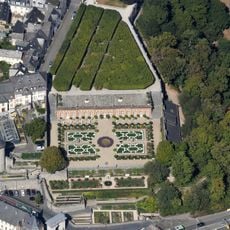
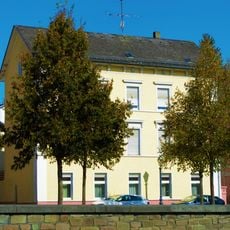
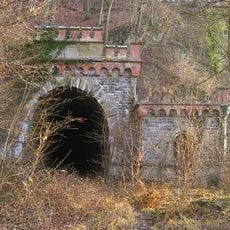
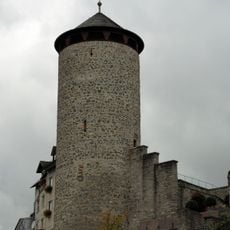
Jagdschloss Windhof, Hunting lodge in Weilburg, Germany.
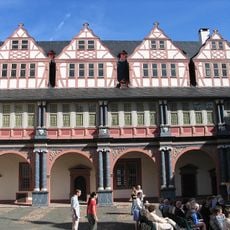
Jagdschloss Windhof is a hunting lodge in Weilburg featuring carefully crafted stone details and large windows that bring light into the rooms. The architecture follows traditional German building styles with high ceilings and decorative elements that show skilled craftsmanship throughout.
A farmstead called Wynthusin was first recorded near the site in 1327; from 1369 it was worked for the counts of Nassau-Weilburg. Between 1713 and 1726 Count Johann Ernst had it rebuilt as a baroque hunting and pleasure palace, with Julius Ludwig Rothweil as architect. In 1934–1936 it was converted for a school for Volkshochschule teachers moved from Frankfurt.
The name Windhof, recorded from 1671, likely refers to the exposed hilltop site where the complex stands open to storms. The lodge served the Nassau-Weilburg court as a summer residence and pleasure palace; between 1723 and 1726 a pond with an island held a Turkish pleasure house containing six straight and four round beds, removed in 1749 after storm damage.
The Windhof stands on an open plateau above Weilburg, exposed to wind, so bring a jacket even in summer. The baroque main axis was aligned on the Schlosskirche of Weilburg, but trees now block that sightline. The complex is a heritage monument and not a museum; visit it as part of a walk from the town.
The main building was begun in 1716 but left unfinished when Count Johann Ernst died in 1719; his son Karl August cut costs and dismissed architect Julius Ludwig Rothweil. Work resumed in 1722 and ended in 1726. A pond with an island holding a Turkish pleasure house, fitted with six straight and four round beds, was added in 1723–1726 and removed in 1749 after storm damage.
The community of curious travelers
AroundUs brings together thousands of curated places, local tips, and hidden gems, enriched daily by 93,602 contributors worldwide.