Lüdersen nuclear bunker, Nuclear bunker in Lüdersen, Germany.
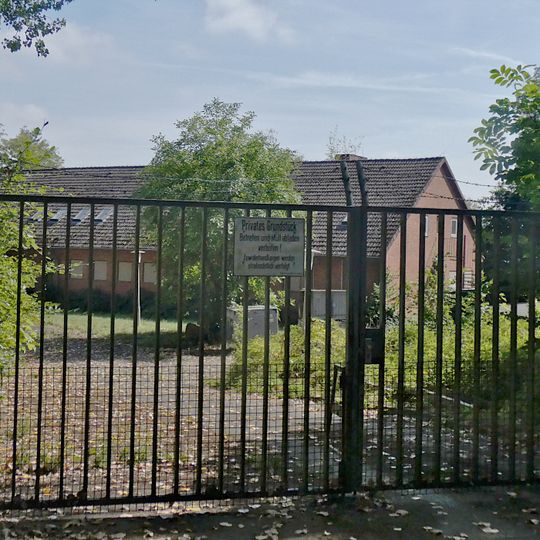
The Lüdersen nuclear bunker is a decommissioned Bundeswehr base switching and exchange station (GSVBw 21) built 1964–1966 near Lüdersen, a district of Springe. Its 870 m² bunker lies ten metres deep beneath the centre of a 1.52-hectare fenced site, entered at the southwest corner, with a single-storey brick service building of 30 offices (740 m²) standing in the eastern part. The bunker's outer walls and floor slab are 3 m thick reinforced concrete, and its ceiling forms a shallow gable, 3.60 m thick at the middle and 3.00 m at the edges.
From 1957 the Bundeswehr planned its own network of base switching and exchange stations, spaced 50 to 80 km apart in sparsely populated areas. Construction of GSVBw 21 at Lüdersen began in October 1964 and was completed in 1966; 27 of the 34 stations were operating by April 1969. Operations ceased in 1996, and the site stood empty for eleven years before two Hanover lawyers bought it in early 2008 for data archiving.
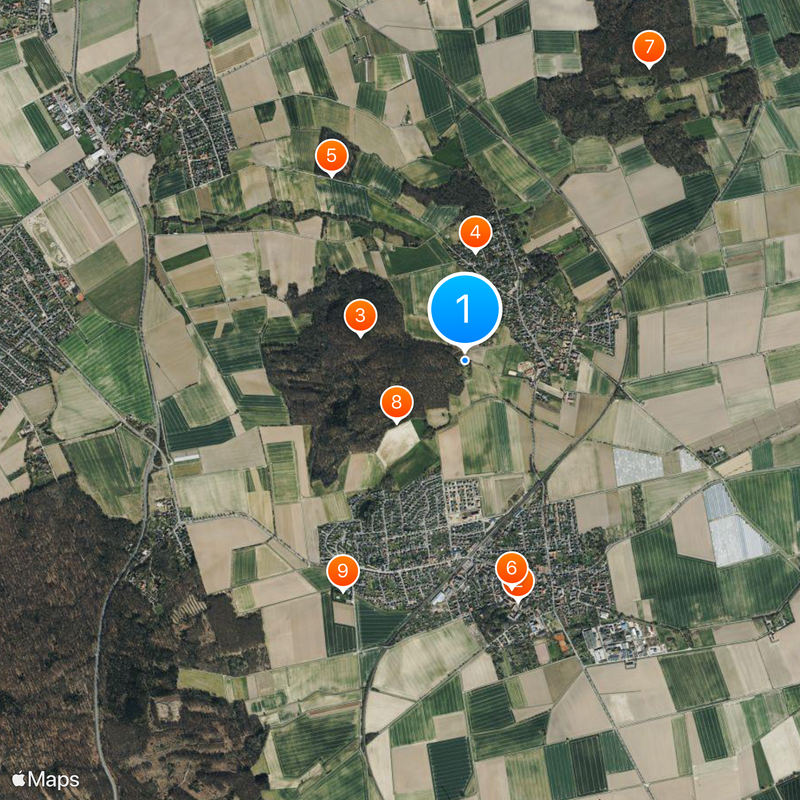
The site is named after Lüdersen, the Springe district about a kilometre to the northeast. From July 2007 to January 2008 volunteers of the association Vorbei restored vandalised fittings and gave guided tours; after the 2008 sale the bunker became a private data archive, and the association moved its tour online as a virtual bunker walk with several hundred photographs.
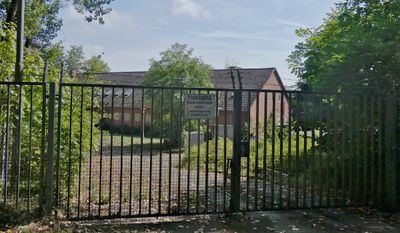
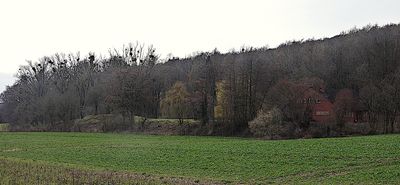
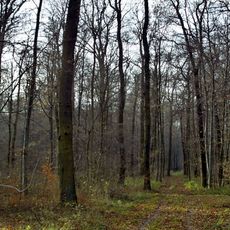
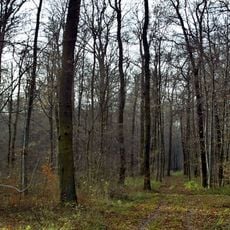
The site is fenced and privately owned; the bunker is not open to the public, and the museum tours offered by the Vorbei association ended when the property was sold in early 2008. The entrance to the 1.52-hectare grounds is in the northeast corner, the service building stands in the eastern area, and the bunker entrance lies at the southwest corner. A wooded strip on the western edge blocks the view from the adjacent forest path.
The bunker's ceiling is a shallow gabled roof, 3.60 m thick at the centre and 3.00 m at the edges, a shape chosen to ensure rainwater drainage. Its floor slab and outer walls rest on a roughly one-metre gravel bed and consist of 3.00 m thick reinforced concrete. In a war it was meant to hold 65 soldiers, while about ten people worked per shift in peacetime.
The community of curious travelers
AroundUs brings together thousands of curated places, local tips, and hidden gems, enriched daily by 92,720 contributors worldwide.