Villa Schocken, Early 20th century residence in Bremerhaven, Germany
Villa Schocken is a two-storey residential building at Wurster Straße 106 in Bremerhaven-Lehe, built in 1916 for butcher and city councillor Heinrich Kuhlmann. The Schocken family lived here from 1933 until their deportation in 1941. Since 1988 the villa has served as an AWO nursing home, with a 1960s annex added by the Arbeiterwohlfahrt.
Built in 1916 for butcher and city councillor Heinrich Kuhlmann, the villa was acquired in 1932 by Joseph and Jeanette Schocken, who moved in with their children in 1933. During the November 1938 pogrom the house was spared after fire chief Heinrich Steiln argued that simultaneous fires would overwhelm the city's fire service. From 1945 the US Army used it as an officers' club, and in 1947 thousands of denazification cases were processed there.
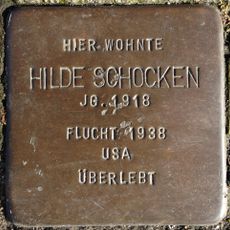
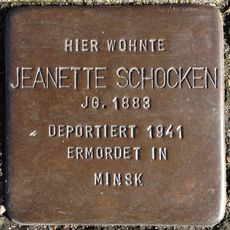
The house is named after Joseph Schocken, who bought it in 1932; his wife Jeanette ran the department stores after his death in 1934 and sheltered Jewish refugees there until she and her daughter Edith were deported to Minsk in 1941. Since 1991 the Jeanette Schocken Prize, a Bremerhaven literary award for authors opposing hatred and injustice, has commemorated her.
The villa at Wurster Straße 106 in Lehe is a nursing home run by the AWO, so it is not open to tourists and there are no guided tours. Visitors can view the building from the street; the 1960s extension added by the AWO is visible next to the 1916 main house. The Jeanette Schocken Prize, awarded every two years, keeps the family's name in public view.
In the night of 9 to 10 November 1938, the villa was to be burned along with other Jewish-owned houses. Fire chief Heinrich Steiln convinced the Nazi leaders gathered in the Hanseaten-Café that the fire service could not protect the city if so many fires broke out at once, and the villa survived.
The community of curious travelers
AroundUs brings together thousands of curated places, local tips, and hidden gems, enriched daily by 94,537 contributors worldwide.