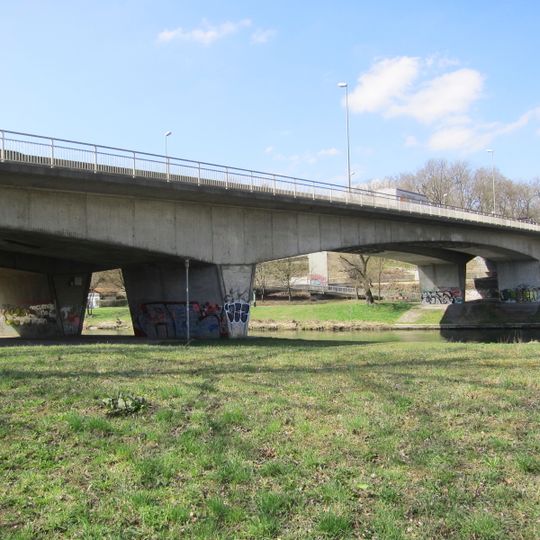
Konrad-Adenauer-Brücke, Beam bridge in Ulm and Neu-Ulm, Germany
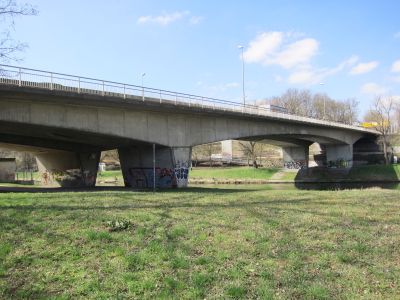
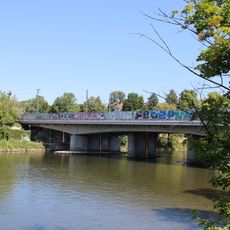
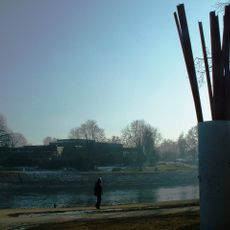
The Konrad-Adenauer Bridge crosses the Danube with two parallel hollow box girders resting on two main piers. The structure includes six traffic lanes along with separate paths for pedestrians and cyclists.
The bridge was designed by Ulrich Finsterwalder and built in 1954 in just ten months. It was one of the first prestressed concrete bridges erected using the free cantilever method, with two parallel haunched box girders built out from each pier and joined at midspan. Originally called Ringbrücke, it carried four lanes until a 1972 conversion to six lanes.
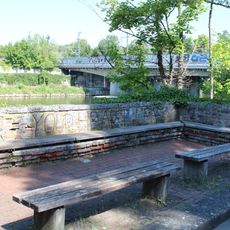
The bridge carries the name Konrad-Adenauer-Brücke, but its steel sign reads "Adenauerbrücke"; it was originally called Ringbrücke. It links Ulm's Bismarckring with Neu-Ulm's Ringstraße, crossing the Danube where the river forms the border between Baden-Württemberg and Bavaria. The bridge also spans the Südbahn railway line along the northern bank.
The bridge experiences heavy daily traffic and has separate zones for pedestrians and cyclists, making it accessible for foot and bike crossings. Plan to encounter busy conditions, and walkers should stick to the marked pathways.
The bridge was built using innovative prestressed concrete methods that were groundbreaking in engineering at the time. This approach made it possible to achieve longer spans than conventional techniques would allow.
The community of curious travelers
AroundUs brings together thousands of curated places, local tips, and hidden gems, enriched daily by 94,370 contributors worldwide.