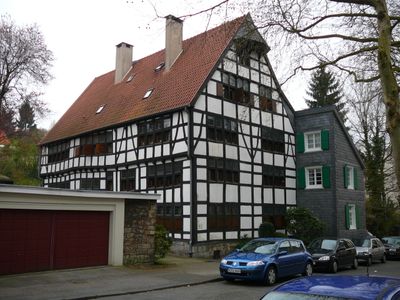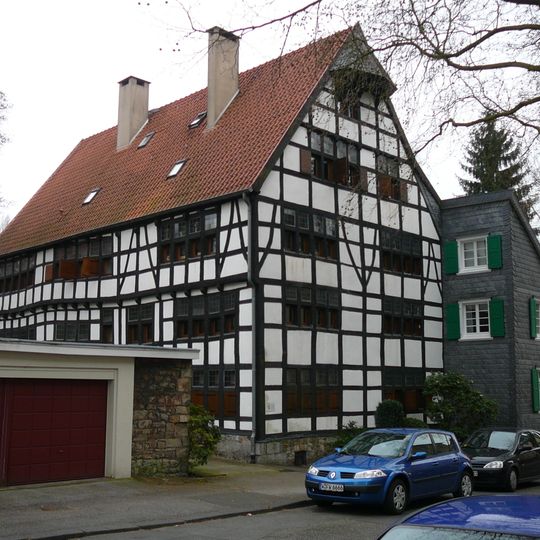
Hofeshaus Lütterkus-Heidt, Renaissance timber-framed house in Wuppertal, Germany.
The Hofeshaus Lütterkus-Heidt is a timber-framed house dating to around 1600 in Wuppertal with characteristic Berg house features. The building combines solid wooden construction with Renaissance elements and contains multiple residential units across approximately 500 square meters.
Peter Lüttringhaus and his wife Katharina built the house around 1600 on an agricultural estate. The building survived the plague of 1612 and the early years of the Thirty Years War.
The house displays Berg architecture typical of this region, combined with Renaissance influences that shaped local building traditions. Its design and construction details reveal how people lived and built in this area centuries ago.
The house is located at Emilstraße 44-46 in Wuppertal and is visible from the street. Since it remains in residential use, viewing the interior is not always possible, but the architectural details are observable from outside.
The house is one of the last remnants of agricultural history in southern Barmen, having survived the industrialization and World War II bombings that transformed much of the district. Its preservation makes it a rare testament to the rural past of this now urban area.
The community of curious travelers
AroundUs brings together thousands of curated places, local tips, and hidden gems, enriched daily by 90,898 contributors worldwide.