Beech of Schwafheim, Natural monument in Schwafheim district, Moers, Germany.
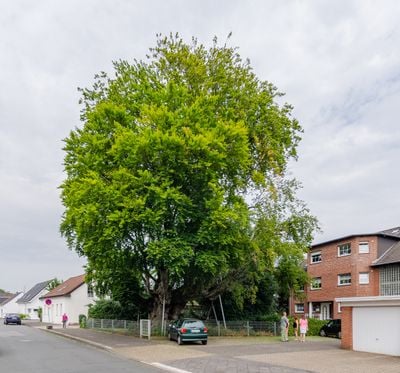
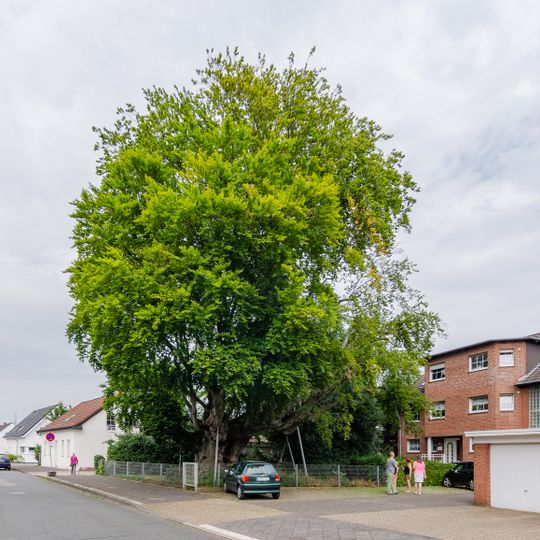
The Beech of Schwafheim was a pollarded red beech at Heideweg 97a in Moers. Its trunk, swollen by repeated pruning wounds, reached a circumference of up to eight metres, and its crown had been cut back roughly every 40 years for firewood. The growths gave it a shape compared to a Süntel beech.
The tree grew at its location for many years, becoming a long-standing feature of the Schwafheim landscape. In August 2015, it was removed due to age-related decline and deterioration of its health.
The tree was named after a bricklayer called Keiser who probably owned the plot at the start of the 20th century; the spelling Kaisers Buche later became usual. It was the village landmark of Schwafheim and one of the thickest beeches in Germany, with a trunk girth of up to eight metres.
The former location is at Heideweg 97a and can be found using coordinates 51.424912 latitude and 6.648665 longitude. The site is easy to reach by following Heideweg street, though only the empty space where it once grew remains today.
The tree's name comes from a mason named Keiser who probably owned the plot in the early 20th century; the spelling later shifted to "Kaisers Buche". In 1916 the art historian Richard Klapheck called it a "strange beech" resembling a "lonely preacher", and Hugo Otto adopted the comparison in 1922.
The community of curious travelers
AroundUs brings together thousands of curated places, local tips, and hidden gems, enriched daily by 94,355 contributors worldwide.