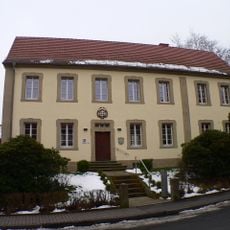
Rotes Schloss Wehrda, Heritage castle in Wehrda, Germany
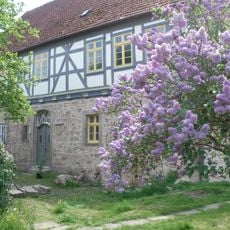
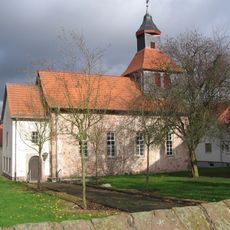
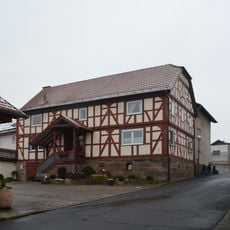
Rotes Schloss Wehrda is a rectangular timber-framed building of ten by four axes with a plastered, solid ground floor. Its corners, doors and windows are framed in sandstone, and a round stair tower with a timber-framed upper storey stands before the north facade, rising above the mansard hipped roof. Remains of medieval walls are still visible, and a park with a large garden and avenue lies to the south.
The Herren von Trümbach, Fulda monastery vassals first documented in 1133, built the timber-framed castle in the second half of the 16th century. Archaeologists trace the vaulted cellars to the 12th century, and the foundations rest on oak piles driven into marshy ground. The date 1668 in the timberwork marks a major renewal after the Thirty Years' War, when the second storey was probably added in Baroque style. The family line died out in 1905.
The name Rotes Schloss ("Red Castle") refers to the colour of the building, not to brickwork: it is a timber-framed house with a plastered, massive ground floor, sandstone-framed corners and openings. In the village of Wehrda it stands alongside two other noble seats, the Gelbe Schloss and Schloss Hohenwehrda, which replaced the earlier castrum Werdowe near the deserted settlement of Trumbach.
The castle is now a privately occupied building located in Haunetal municipality in Hesse state. Those wishing to view the architecture from outside can observe it from the public road, but should keep distance and respect private grounds.
The cellars of the Rote Schloss are older than the building above them: archaeologists trace the vaulted cellar to the 12th century, and the foundations rest on oak beams driven into marshy ground. Traces of medieval walls are still visible, and the building may once have been ringed by a moat.
The community of curious travelers
AroundUs brings together thousands of curated places, local tips, and hidden gems, enriched daily by 93,975 contributors worldwide.