Aburi Botanical Gardens, Botanical garden in Aburi, Ghana.
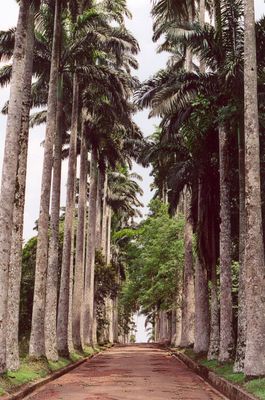
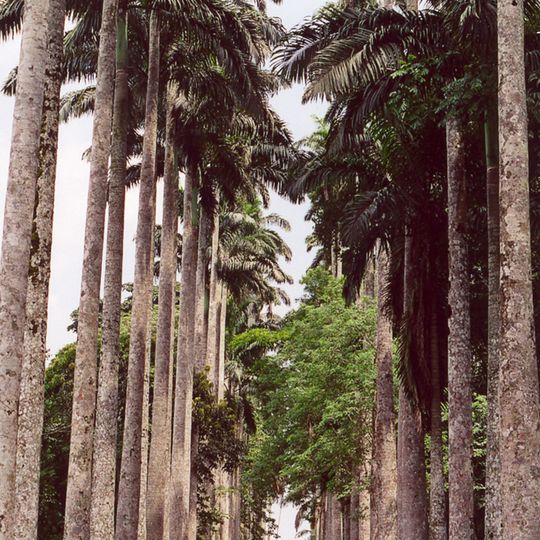
Aburi Botanical Gardens covers 64.8 hectares in Aburi, Eastern Region, Ghana. Tall, slender palm trunks rise in parallel rows, their pale grey-brown cylinders marked with darker leaf scars and topped by crowns of long, dark green fronds arching outward and downward. Lower rounded green foliage fills the midground between the trunks, and the garden holds tree species such as silk cotton (Ceiba pentandra), mahogany, cedar and silver oak.
The site held a sanatorium built in 1875 for Gold Coast government officials. Alexander Worthy Clerk, a Basel missionary, supervised clearing the land, and the gardens opened in March 1890 under Governor William Brandford-Griffith and Dr John Farrell Easmon. William Crowther of Kew became first curator that year, and from 1893 Kew-sent Hevea brasiliensis trees supported rubber growing.
The gardens display medicinal plants that local people have used for generations in treating common ailments and maintaining health. Visitors can observe how these species remain part of everyday life and knowledge in the surrounding communities.
The gardens sit in the hills and require comfortable shoes for walking over uneven ground. Visitors should bring water and sun protection, especially if planning to spend several hours exploring.
The garden's first curator, William Crowther, arrived in 1890 from the Royal Botanic Gardens, Kew. The same institution sent Hevea brasiliensis rubber trees to Aburi in 1893, after which the garden promoted rubber growing across Ghana. Look for the tall palms with pale trunks and dark leaf scars lining the paths.
The community of curious travelers
AroundUs brings together thousands of curated places, local tips, and hidden gems, enriched daily by 92,885 contributors worldwide.