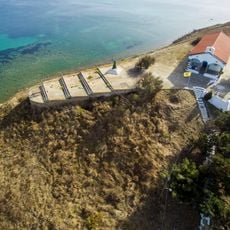
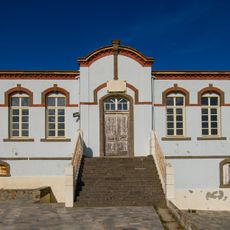
Poliochne, Archaeological site on Lemnos island, Greece.
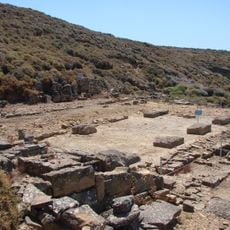
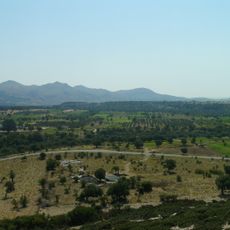
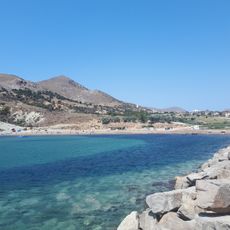
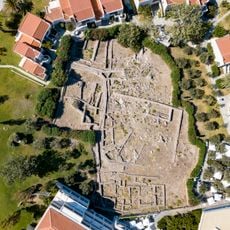
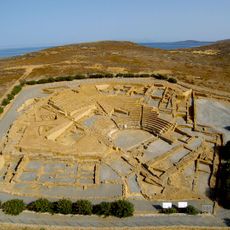
Poliochne is an ancient settlement on Lemnos island with remains from several centuries of prehistory. Excavations reveal houses, pottery, and water management systems that reflect how residents lived in this elevated coastal location.
Excavated from 1930 by the Italian School of Archaeology at Athens under Alessandro Della Seta, with Luigi Bernabò Brea resuming work from 1951, the mound holds seven superimposed towns. Bernabò Brea named them by pottery colour: Black (3500–3200 BC), Blue, Green, Red, Yellow, Brown and Mycenaean. The Black period shows seven building levels of round and oval huts on stone bases; the Blue period added a defensive wall and the first metal items.
The settlement served as a trading hub connecting nearby islands and regions across the Aegean, where merchants exchanged metalwork and pottery. These networks show how early communities maintained contact through maritime routes.
The site is open to visitors who can walk among the excavated structures and study the layout directly. Plan your visit during cooler morning or late afternoon hours to stay comfortable in the summer heat.
Just inside the main gate on the west wall stands a large hall with stone benches running along its full length and a speaker's platform at the centre. Excavators called it the Bouleuterion, and it predates the classical buildings of that name by almost 2,000 years.
The community of curious travelers
AroundUs brings together thousands of curated places, local tips, and hidden gems, enriched daily by 92,984 contributors worldwide.