Nichoria, Archaeological site in Petalidi, Greece.
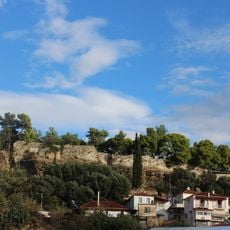
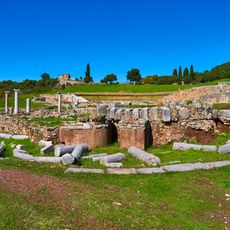
Nichoria is an archaeological site on a ridgetop near Rizomylos, at the northwestern corner of the Messenian Gulf. Excavations by the University of Minnesota from 1968 to 1975 uncovered a Mycenaean settlement with a Pylos-style megaron and a later Sub-Mycenaean apsidal megaron 13.6 m long and 8 m wide, one of the largest of the Greek Dark Ages.
Nichoria was a Mycenaean settlement that reached about 5 hectares in LHIIIA:2 and was subordinate to Pylos, appearing on Linear B tablets as TI-MI-TO A-KO. It was destroyed along with the palace at Pylos, then abandoned for about a century before being resettled in the second quarter of the 11th century BC. It was burned and abandoned around 750 BC.
Pylos's Linear B tablets record the place as TI-MI-TO A-KO, listed among ten tablets dealing with bronze working, taxation, coastal defence, livestock and flax. The name may derive from the terebinth tree, whose scented resin was gathered here. Burials in the tholos tomb continued to be honoured in late classical and Hellenistic times, when the tomb was reused for ancestor cult.
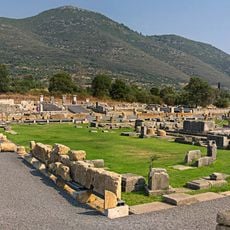
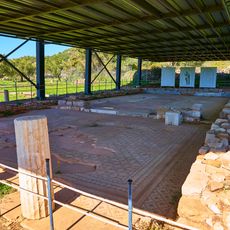
The site lies on a ridgetop near Rizomylos, above the village of Karpofora, at the northwestern corner of the Messenian Gulf. Excavations by the University of Minnesota took place from 1968 to 1975, so the visible remains are those trenches: the acropolis, the tholos tomb and the necropolis.
Ancient clay tablets from Pylos mention this location under a different name and document its role in administration at that time. These written records directly connect the excavated finds with the recorded history of the ancient world.
The community of curious travelers
AroundUs brings together thousands of curated places, local tips, and hidden gems, enriched daily by 93,463 contributors worldwide.