Malia, Archaeological site in Hersonissos, Greece
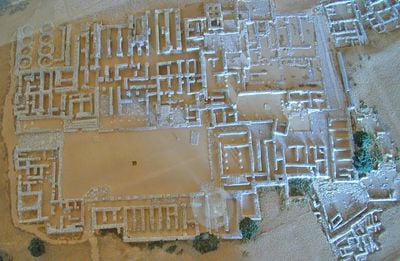
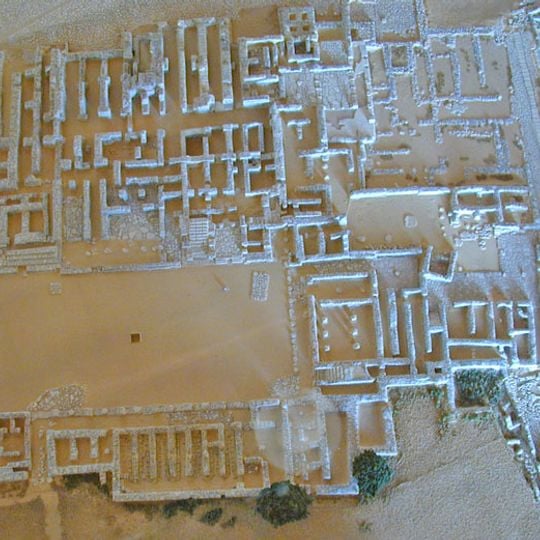
Malia is a Minoan palace complex of low, roofless walls in white and pale grey stone, set on flat tan ground. Rectangular rooms and corridors cluster in the upper and right portions, while a large open area occupies the left centre, marked by a single small dark square. A row of long, narrow parallel foundations runs along the bottom edge. The central court measures 48 by 23 metres.
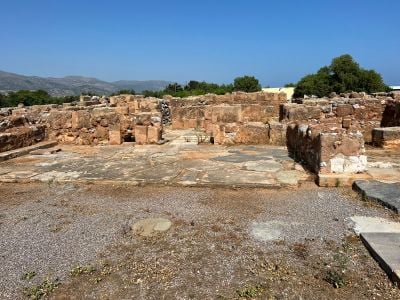
The first palace was built around 1900 BC and destroyed by an earthquake between 1750 and 1700 BC; it was rebuilt larger on the same spot a few decades later, and most visible ruins date from this second period. Around 1450 BC fire damage points to hostile conquest, after which the site was used only briefly. The palace was probably abandoned completely in the 12th century BC.
The central court holds a burnt-offering altar: four brick pillars around a pit where ash with animal remains was found; the pillars likely held grates for the offerings. In the treasury room were found ceremonial weapons, among them a sceptre with a panther's head, taken as royal insignia. The modern name Malia is a later toponym; the ancient name of the town is unknown.
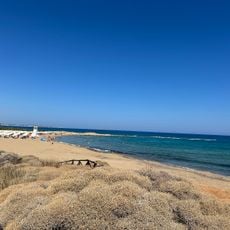
The site lies about 3 km east of modern Malia, near the sea in the coastal plain. Some areas can be entered directly, while wooden walkways elsewhere only allow you to approach the ruins. Excavations continue, and most recent trenches are covered by large transparent roofs on steel supports. Guided tours in English, French and German run during the tourist season.
Excavations at the nearby burial site Chryssolakkos uncovered a golden bee pendant that shows the skilled craftsmanship of ancient artisans. This find reveals how advanced metalworking and artistic ability existed even in that distant time.
The community of curious travelers
AroundUs brings together thousands of curated places, local tips, and hidden gems, enriched daily by 94,021 contributors worldwide.