Amphiareion of Oropos, Greek sanctuary in Oropos, Greece
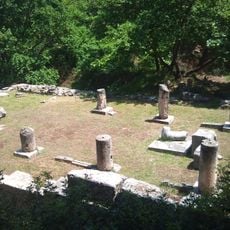
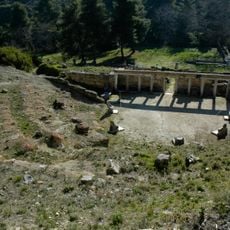
The Amphiareion of Oropos lies on the northwest bank of a ravine between two hills, about 154 m above sea level and 6 km southeast of Oropos. Its early 4th-century BCE Doric temple measured 14 by 28 m, with six columns across the facade and an acrolithic cult statue whose arm remains in situ. A 110 m stoa with 39 Doric columns, a 300-seat theater and a marble clepsydra stand nearby.
The sanctuary was founded in the late 5th century BCE, when the Oropos region belonged to Athens. It was particularly successful in the 4th century BCE, judging from intensive building. Control passed between Athens and Thebes until Alexander the Great destroyed Thebes in 335 BCE. The cult ended with the Theodosian decrees outlawing non-Christian worship at the end of the 4th century CE.
Pausanias records the ritual: after sacrificing to Amphiaraos and the names inscribed on the altar, a visitor sacrificed a ram, slept on its skin and waited for a dream. An inscription found on the site, however, states that each man could sacrifice what he wished. Coins were thrown into the sacred spring after a cure.
The site is walkable across pathways that connect the main areas from temples to the spring. Bring water and sun protection, as shade is limited throughout the grounds.
The sanctuary's sacred spring was where pilgrims threw coins after being healed, as Pausanias records. Nearby stands a marble clepsydra, a rare surviving water clock, and the 4th-century BCE temple had an acrolithic statue of Amphiaraos of which one arm remains in situ.
The community of curious travelers
AroundUs brings together thousands of curated places, local tips, and hidden gems, enriched daily by 93,768 contributors worldwide.