Sanctuary of Artemis Orthia, Ancient Greek temple in Sparta, Greece
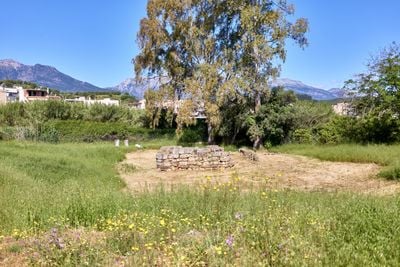
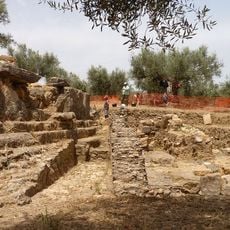
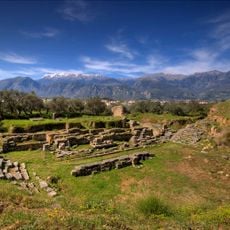
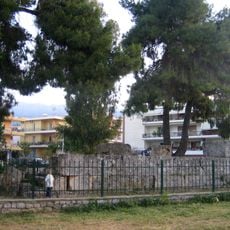
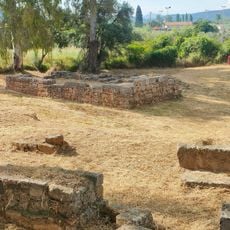
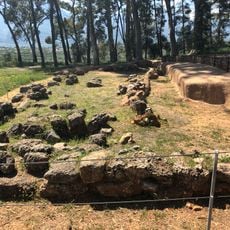
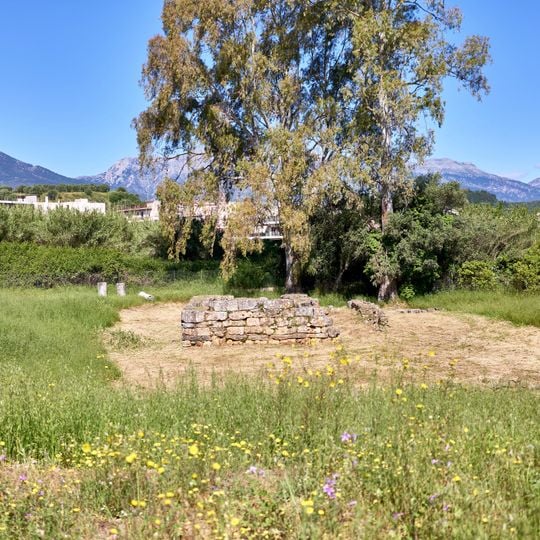
The Sanctuary of Artemis Orthia lies in a natural hollow between Limnae and the west bank of the Eurotas, east of the ancient acropolis. Its limestone temple, rebuilt around 570 BC, measured about 16.8 by 7.5 m and had a two-column porch and a naos. A semicircular Roman theatre, about 54 m across, opens toward the altar.
The site served as a sanctuary from the 8th century BC onward and remained a religious center across many generations. The evidence shows it held importance even under Roman rule.
The cult of Orthia was shared by Sparta's four villages: Limnae, Pitane, Cynosura and Mesoa. Offerings were small but numerous: clay masks of old men and hoplites, and lead and terracotta figurines of men and women playing the flute, lyre or cymbals, or riding horses. Artemis was worshipped here as Lygodesma, "bound with willow", because the wooden image was said to have been found in a willow thicket.
The sanctuary lies within ancient Sparta, on the south bank of the Eurotas, with the Roman theatre's semicircular seating just south of the temple and opening toward the altar. The excavated ground is open and unshaded, so plan around midday heat. Much of what survives belongs to the later temple, rebuilt in the 2nd century BC.
Pausanias records that the wooden effigy of Orthia was said to come from Taurica, stolen by Orestes and Iphigenia, and that it drove those who found it insane. An oracle then ordered human blood be shed on the altar; Lycurgus replaced the human sacrifices with the ritual flogging of ephebes.
The community of curious travelers
AroundUs brings together thousands of curated places, local tips, and hidden gems, enriched daily by 92,807 contributors worldwide.