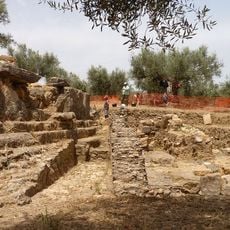
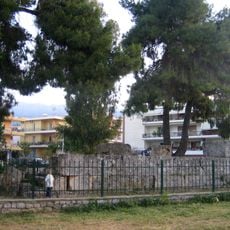
Theatre of Sparta, Roman theatre ruins in Sparti, Greece
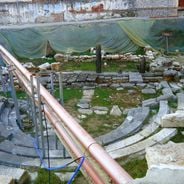
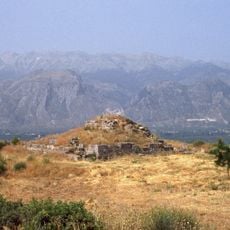
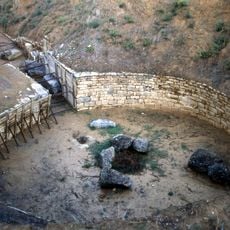
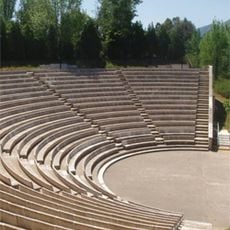
The Theatre of Sparta sits on the southwest slope of the ancient acropolis, north of the modern city. Built of local white marble, it had a horseshoe-shaped orchestra about 25 m across and a wide seating area with an outer diameter of roughly 140 m, estimated to hold up to 16,000 spectators. Its stage was wooden and movable, kept in a stage-building called the skenotheke.
The theatre was built around 30–20 BC, at the transition from the late Hellenistic to the early Roman period, and is linked to the patronage of Eurycles Herclanus, a friend of Octavian. At the end of the 1st century AD it received a permanent marble stage building in the Corinthian order, donated by the emperor Vespasian. It remained in use until the 4th century AD, after which a Byzantine settlement occupied the site from the 10th to the 14th century.
The theatre hosted public assemblies and festivals as well as dramatic performances, and the games held in Sparta included the Gymnopaidiai and ball-throwing contests tied to religious cult. The name of Eurydes Herclanus, a friend of Octavian, is linked to its construction. Inscriptions from the 2nd century AD survive on its walls.
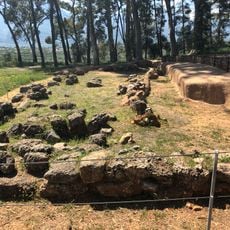
The theatre lies on the southwestern slope of the ancient acropolis, north of the modern town centre. Excavations by the British School at Athens in 1906, 1924-1927, 1992-1998 and 2008 left the site only partly uncovered, so expect unexcavated ground and ruins rather than a laid-out monument.
The stage was not fixed: it was a wooden structure on wheels, kept in a building called the skenotheke at the western passage and rolled out for performances. The orchestra was horseshoe-shaped, about 25 m across, and the cavea's outer diameter reached roughly 140 m.
The community of curious travelers
AroundUs brings together thousands of curated places, local tips, and hidden gems, enriched daily by 92,856 contributors worldwide.