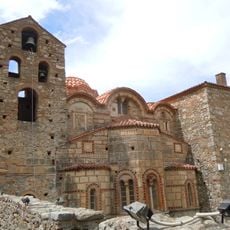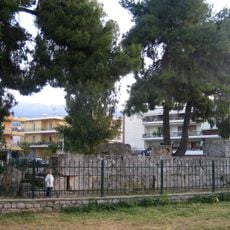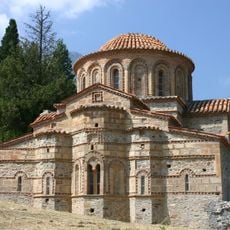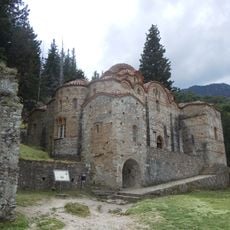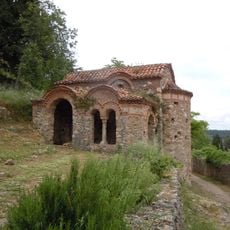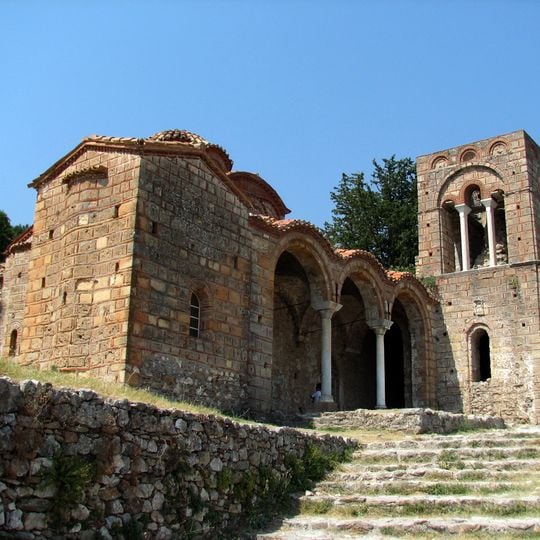
Agia Sofia church, Byzantine church in Mystras, Greece
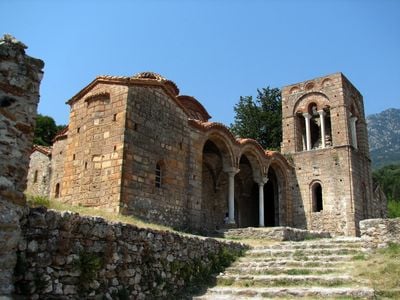
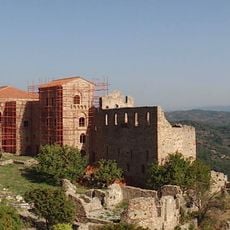
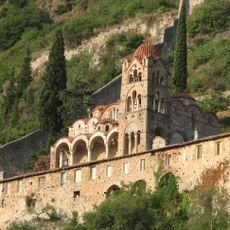
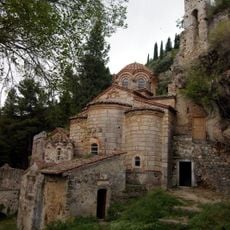
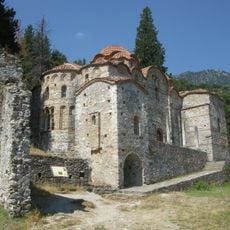
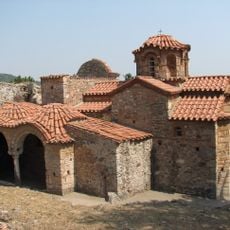
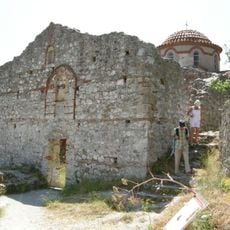
Agia Sofia is a Byzantine church within the medieval site of Mystras, Greece, built on a cross-in-square plan with a central dome resting on two columns. Three apses mark its eastern end, and patches of painted plaster remain visible on several interior walls.
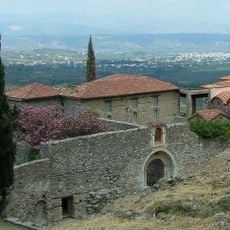
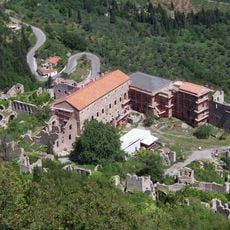
Manuel Kantakouzenos had this church built in the mid-1300s as part of the Zoodotes Christos monastery complex. It was later absorbed into the nearby palace as a chapel, showing how religious buildings were repurposed to serve the ruling families of the medieval settlement.
The southeast chapel contains frescoes of the Birth of the Theotokos, painted by the same artists who worked in the nearby Peribleptos church. This connection shows how painters moved between different sacred spaces within the same Byzantine community, carrying their style with them.
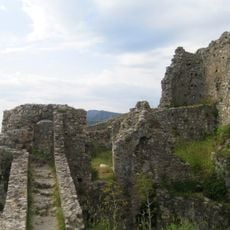
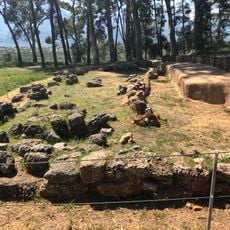
The church is accessible as part of the Mystras archaeological site and can be visited alongside other medieval structures on the same grounds. Sturdy shoes are recommended, as paths are uneven and some sections require climbing stone stairs.
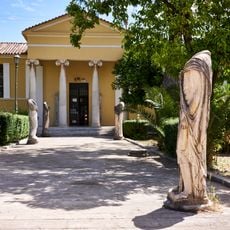
The church contains marble sculptures from the 1100s that share stylistic features with work found in the Samarina church in Messenia. This suggests that the same craftsmen traveled across different regions, carrying a consistent approach to religious decoration with them.
The community of curious travelers
AroundUs brings together thousands of curated places, local tips, and hidden gems, enriched daily by 60,000 contributors worldwide.