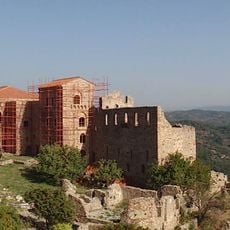
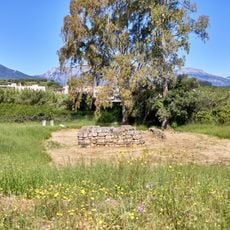
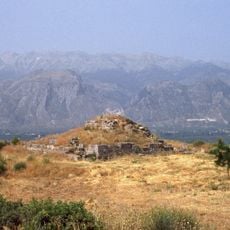
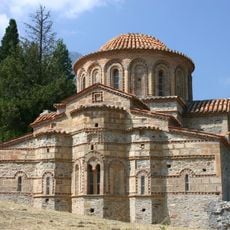
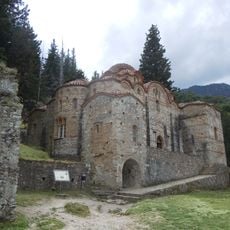
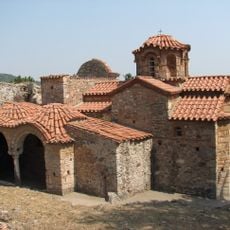
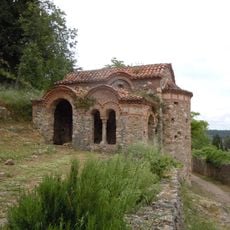
Peribleptos Monastery, Byzantine monastery in Mystras, Greece.
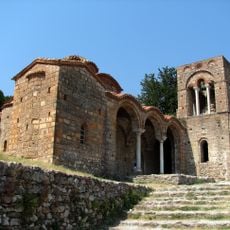
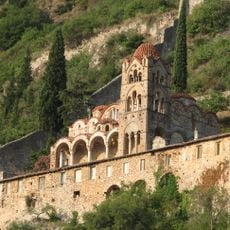
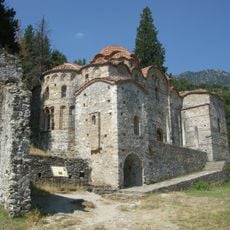
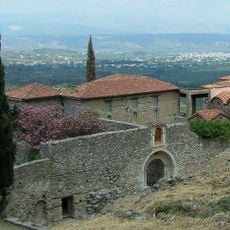
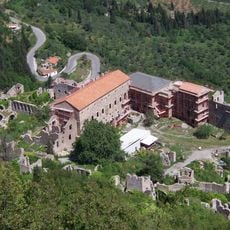
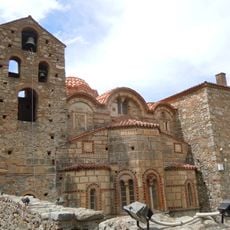
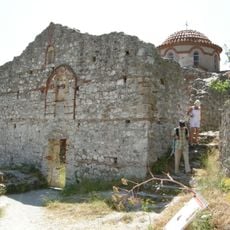
Peribleptos Monastery is a Byzantine structure with a church designed as a cross within a square, built directly into a cliff and integral to the Mystras archaeological site. Its construction uses squared stone and decorative tiles that give the building a carefully crafted appearance.
The monastery was probably built in the mid-14th century by Manuel Kantakouzenos, the first Despot of the Morea, and named after a celebrated monastery of Constantinople. Its frescoes date between 1348 and 1380. Mystras fell to the Ottoman Turks in 1460, yet the Byzantine architecture and art survived.
The monastery takes its name from the Peribleptos monastery in Constantinople, dedicated to the Virgin Mary. Inside, the dome depicts Christ Pantocrator, the Virgin and the Prophets; the head of Saint Gregory of Nazianzus, 4th-century Archbishop of Constantinople, is kept as a relic. The Baptism of Christ includes a fresco of Saint John the Baptist.
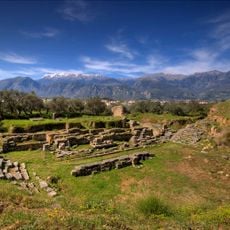
The site is located within the Mystras archaeological area and can be visited during regular opening hours. Comfortable walking shoes are important since the grounds are uneven and reaching some areas involves climbing stairs.
The wall paintings were created by multiple artists over time, each bringing their own style to the work. Later, certain family emblems were deliberately removed from the walls, revealing shifts in political power that affected the monastery.
The community of curious travelers
AroundUs brings together thousands of curated places, local tips, and hidden gems, enriched daily by 93,669 contributors worldwide.