Vaphio beehive tomb, Bronze Age beehive tomb in Vafeio, Greece
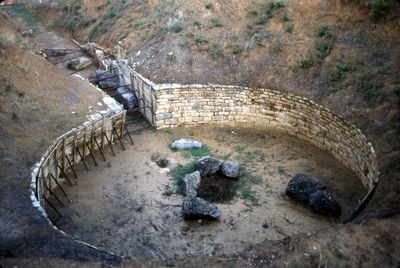
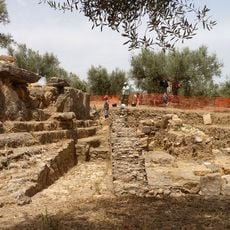
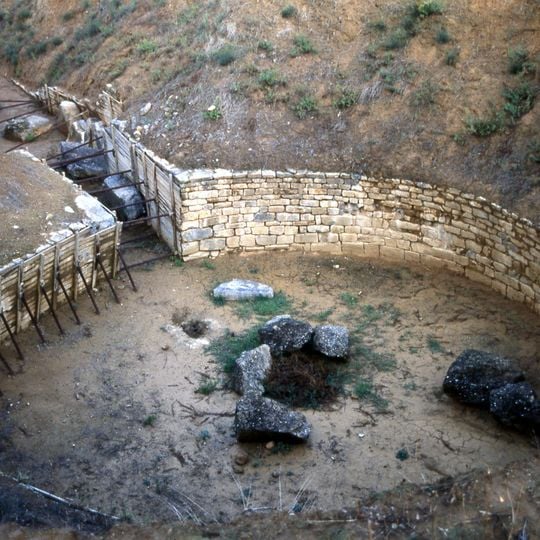
The Vaphio beehive tomb is a Mycenaean burial site south of Sparta, made up of a long stone entrance passage, called a dromos, that leads to a rounded underground chamber carved into the rock. Both the passage and the chamber are built from large stone blocks, and the corbelled roof of the chamber is still visible today.
The tomb was built during the Late Bronze Age, around 1500 BCE, and served as a burial place for a person of high standing in Mycenaean society. The archaeologist Christos Tsountas excavated the site in 1889 and uncovered grave goods that revealed links between the Mycenaean world and Minoan Crete.
The two gold cups found here and now on display in the National Archaeological Museum in Athens each show bull-catching scenes in a different style, one Minoan and one Mycenaean. Seeing them side by side makes the contrast between the two artistic traditions immediately visible.
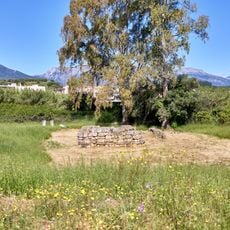
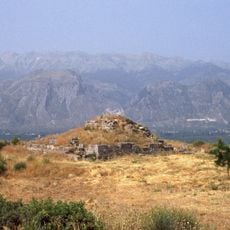
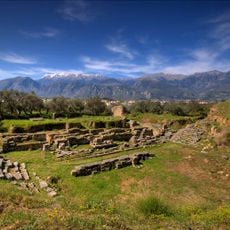
The site is located a short drive south of Sparta, on the right bank of the Eurotas River, and can be reached by road. The area is open and exposed with no shade, so visiting in the morning or late afternoon is more comfortable, especially in summer.
More than forty finely carved seals made of stone and gold were found inside the tomb, making this one of the largest concentrations of Bronze Age seals ever found in one place in the Aegean. Some of these seals show Minoan motifs, which is unexpected for a burial site on the Greek mainland.
The community of curious travelers
AroundUs brings together thousands of curated places, local tips, and hidden gems, enriched daily by 60,000 contributors worldwide.