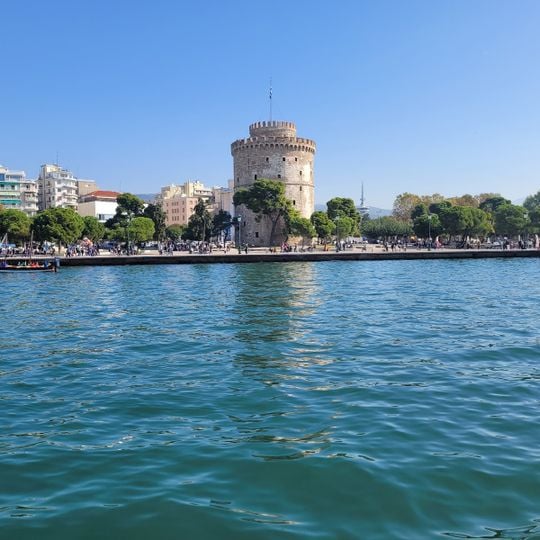
White Tower of Thessaloniki, Ottoman fortification tower at waterfront, Thessaloniki, Greece
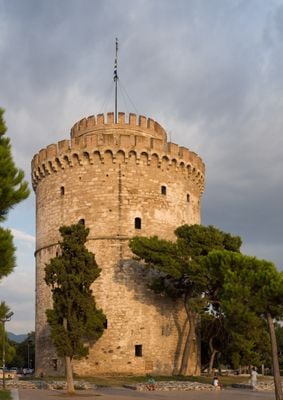
The White Tower is a cylindrical stone tower 34 m high and 23 m in diameter, built of light brown and tan rectangular blocks in horizontal courses. Its upper section is narrower, separated by a projecting band of small arched corbels, and carries a row of pointed arches below a crenellated parapet. Small rectangular and arched windows are set into the wall at intervals, and a thin metal pole rises from the top.
The tower was built in the 15th century as part of Ottoman fortifications after the conquest of the city. Later it served as a prison and experienced a symbolic transformation in the 19th century that gave it its present name.
The tower's names record its past: an Ottoman inscription of 1535–1536 called it the Tower of 67, and after the 1826 massacre of Janissaries it was known as Kanlı Kule, the Blood Tower. A Jewish convict, Nathan Guidili, whitewashed it in exchange for freedom, and by 1912 the Greek population kept the name White Tower.
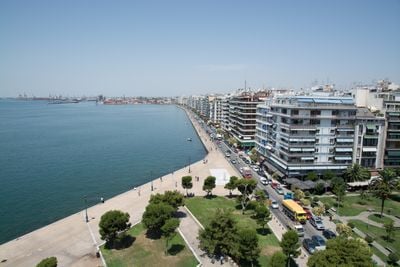
The tower stands on the Nikis waterfront boulevard, where the entrance faces the promenade. Inside, a spiral ramp and a central room on each of the six floors give access to the embrasures; the top platform in front of the turret is about 5 m wide. School visits can be arranged by contacting the Museum of Byzantine Culture.
The original name was Tower of Blood until a prisoner in the late 19th century whitewashed the walls and received a pardon for it. This action changed not only the color but also the symbolic perception of the structure in the city.
The community of curious travelers
AroundUs brings together thousands of curated places, local tips, and hidden gems, enriched daily by 92,797 contributors worldwide.