Vari Cave, Ancient religious cave sanctuary in Mount Hymettus, Greece
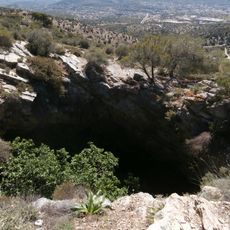
Vari Cave is an ancient limestone sanctuary carved into the slopes of Mount Hymettus, southeast of Athens. It consists of two chambers connected by steps cut from the rock, with shrines and relief carvings worked directly into the walls.
Inscriptions in the cave record that Archedemus of Thera, who called himself a nympholept, built the sanctuary "at the Nymph's counsel" and carved its reliefs and steps. Occupation ran from about 600 BC to 150 BC, then resumed under Constantine the Great and Constantius II before ending around the sixth century. Excavation in 1901 was led by Charles Heald Weller of the American School of Classical Studies at Athens.
Inscriptions name the sanctuary's founder as Archedemus of Thera, a nympholept who acted "at the Nymph's counsel". The cave was one of five Pan caves near ancient Athens, and a late account has Plato's parents Ariston and Perictione sacrificing here for the infant Plato to Pan, Apollo, the Muses and the Nymphs. Excavators found many Roman oil lamps, some with Christian designs.
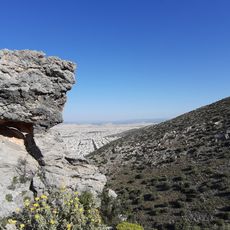
The cave is reached by hiking trails on Mount Hymettus, so sturdy footwear is a good idea before setting out. Inside, the passages are uneven and the light is low, so bringing a flashlight makes the visit easier.
Among the reliefs is a carving of Archedemus himself holding stone-working tools, which is one of the few surviving self-portraits from ancient Greece. Some of the objects found on the site are now held at the National Archaeological Museum in Athens, so a visit there completes the picture.
The community of curious travelers
AroundUs brings together thousands of curated places, local tips, and hidden gems, enriched daily by 94,096 contributors worldwide.