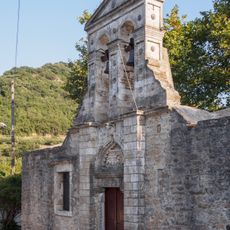
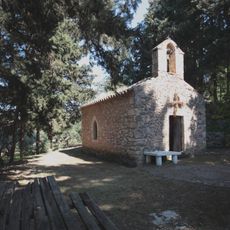
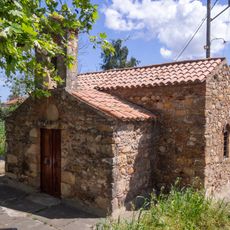
Moni Gonia Monastery, Orthodox monastery in Kolymvari, Greece.
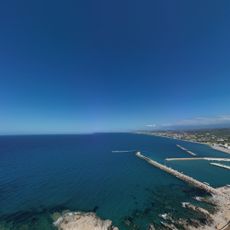
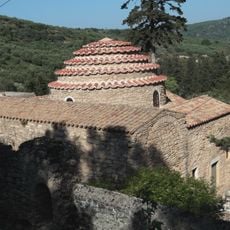
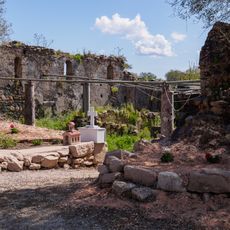
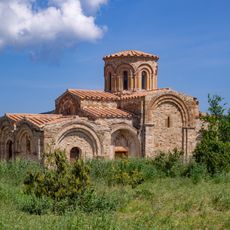
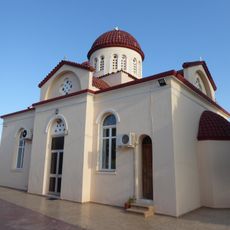
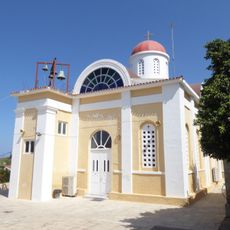
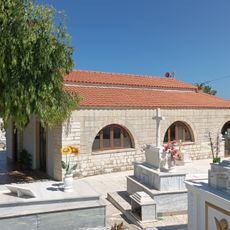
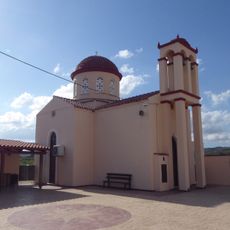
Moni Gonia Monastery is a fortified religious complex near the Gulf of Chania with thick stone walls and a three-apse church at its center. The building combines defensive structures and monastic chambers arranged around interior courtyards that served both protection and daily life.
Founded in the 9th century at Menies on the site of the temple of Artemis Britomartis and originally dedicated to St. George, the monastery was moved in the 13th century and rebuilt at Kolymvari from 1618 by the monk Vlasios of Amaseia in Cyprus. The church was completed in 1634, as an inscription on the west side of the dome records. Ottoman attacks damaged it repeatedly, and a cannonball from 1867 remains lodged in the seaside wall.
The monastery is dedicated to the Dormition of the Virgin Mary, celebrated on 15 August, and takes its name from the Hodegetria icon attributed to Luke the Evangelist. Its museum displays 15th- to 17th-century Cretan icons by Parthenios, Andreas Ritzos and Neilos, and ancient inscriptions are set into the walls.
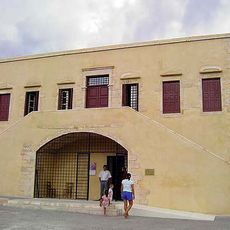
The monastery sits about 26 kilometers west of Chania and is open to visitors during regular hours. The site is arranged so you can walk through the fortified walls, courtyards, and interior spaces where religious art and manuscripts are displayed.
A cannonball from the Ottoman attack of 1867 is still lodged in the seaside wall of the monastery, a detail many visitors walk past without noticing. The monastery also keeps Byzantine-era artifacts from the 15th to the 17th centuries, including Cretan icons by Parthenios, Andreas Ritzos and Neilos.
The community of curious travelers
AroundUs brings together thousands of curated places, local tips, and hidden gems, enriched daily by 93,793 contributors worldwide.