Sesklo archaeological site, Neolithic archaeological site in Thessaly, Greece
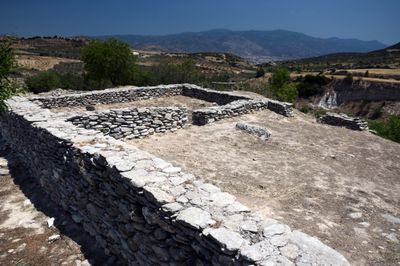
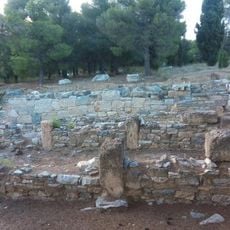
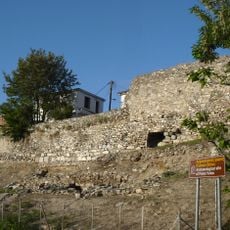
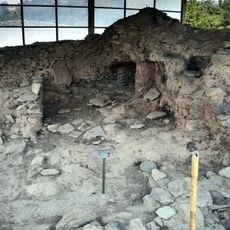
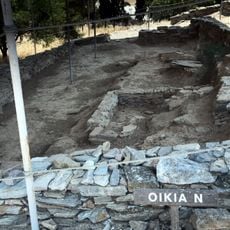
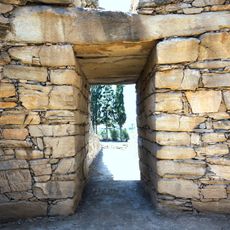
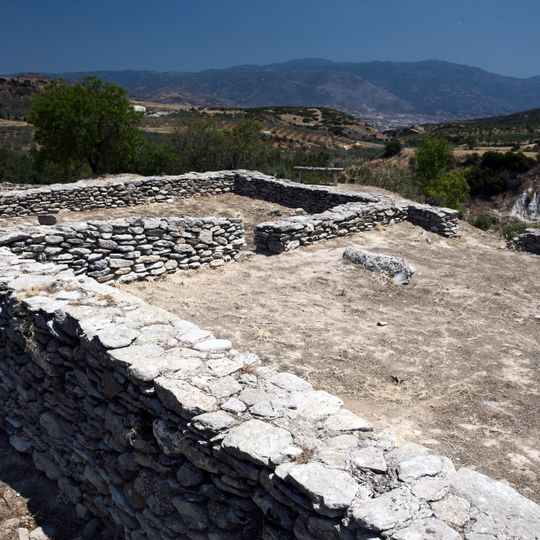
Sesklo is an archaeological site on Kastraki hill near Volos in the Thessaly region. The grounds hold stone foundations that once supported homes, along with traces of narrow lanes running between the individual structures.
Christos Tsountas began excavations in 1901 and uncovered one of the oldest Neolithic settlements in Europe, inhabited between 7000 and 4000 BC. Later work showed the place was occupied over millennia and went through several phases of construction.
The name Sesklo now designates both the excavation and the Aromanian village beside it, about 8 km west of Volos. The site gave its name to the Sesklo culture, the earliest known Neolithic culture of Europe, which spread through Thessaly and parts of Macedonia. Among the finds are numerous statuettes of women, often pregnant, linked to fertility cults; archaeologist Marija Gimbutas recognised a gorgon mask dated to about 6000 BC.
The site is open during regular hours and sits on a hill that offers little shade in hot weather. Those who want to learn more about the finds can visit museums in Volos or Athens, where many objects are on display.
Tools made from obsidian come from the island of Melos and prove early trade links across the Aegean. These black volcanic glass fragments show that the inhabitants already used long sea routes to obtain prized materials.
The community of curious travelers
AroundUs brings together thousands of curated places, local tips, and hidden gems, enriched daily by 92,843 contributors worldwide.