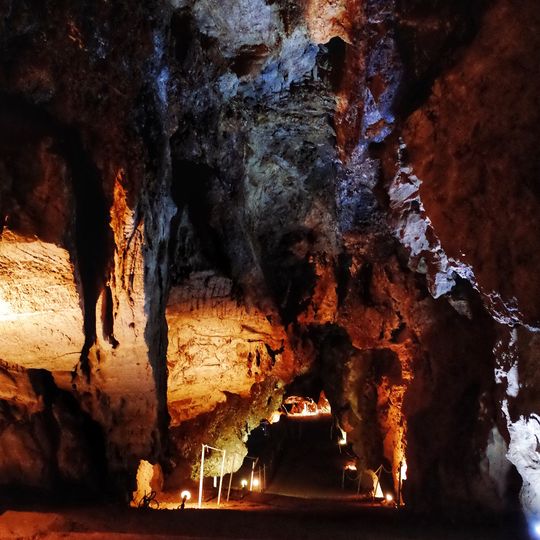
Katafyki Cave, Natural cave formation in Dryopida, Greece.
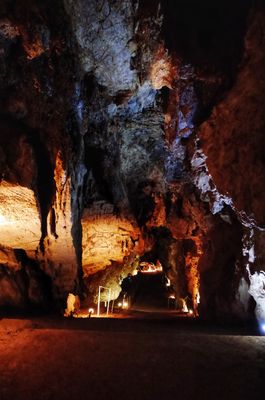
Katafyki Cave is a natural underground formation near Dryopida with over 600 meters of tunnels running through multiple chambers. The passage walls display colorful stalactites and stalagmites in various shapes and sizes, created by mineral deposits accumulating over thousands of years.
Iron ore was extracted from the cave in modern times from 1835 to 1940, with foreign mining companies running the operation from 1910. The cave may have been mined already in antiquity, as literature mentions metal mines on Kythnos. Rails and carts from this activity remain inside.
The cave's name, Katafyki, means "shelter", recalling its use as a refuge across different periods. Inside, the large plateau called the piazza is where Dryopida's inhabitants once held celebrations and danced at Easter, after the Resurrection. The stalactites of the 25 by 17 metre hall carry popular names such as "jellyfish", "octopus" and "teddy bear", and a large stalagmite is called the "Tower of Babel".
The cave entrance lies within Dryopida itself, at Fires, 190 m above sea level, and access is by guided tour along the route. The interior is lit and holds a constant 17 °C. Old mine shafts remain from the iron-extraction years, so stay on the guided way; the site reopened in July 2015 after a two-year closure ordered by the Ministry of Culture for safety.
In the 25 by 17 metre stalactite hall, formations carry names such as "jellyfish", "octopus" and "teddy bear", and a large stalagmite is called the "Tower of Babel". Explosives used by miners destroyed much of the cave's stalactite and stalagmite decoration, and fires lit for rituals inside damaged further parts.
The community of curious travelers
AroundUs brings together thousands of curated places, local tips, and hidden gems, enriched daily by 94,658 contributors worldwide.