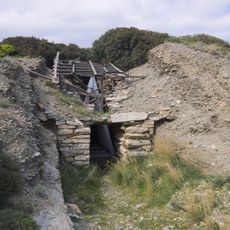
Agia Irini, Bronze Age archaeological site in Vourkari, Greece
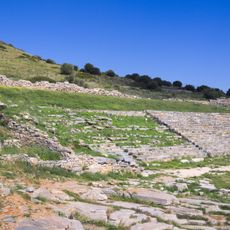
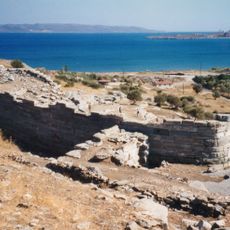
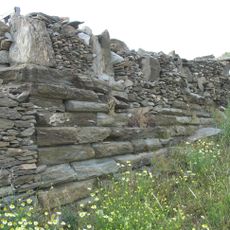
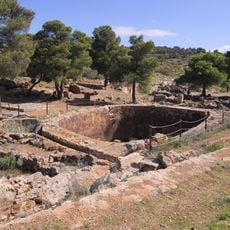
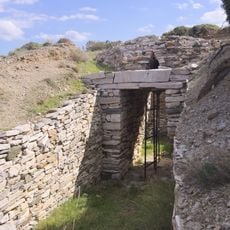
Agia Irini is a Bronze Age settlement on the island of Kea featuring ruins of fortified walls, ancient temple structures, and residential buildings from prehistoric times. The coastal location contains numerous ceramic vessels that demonstrate advanced crafting techniques of the period.
The first settlement was established in the late Neolithic period around 3300 BC and gradually became an important trading center. Maritime connections with mainland Greece facilitated cultural and economic exchange over many centuries.
The sanctuary yielded 55 baked-clay female figurines, from 60 cm to life-size, dressed in Minoan-style floor-length skirts; most wear a bodice with bare breasts, the rest are bare-chested. An Archaic inscription suggests Dionysos was worshipped here. The site is named after a Byzantine chapel of Agia Irini built on the peninsula.
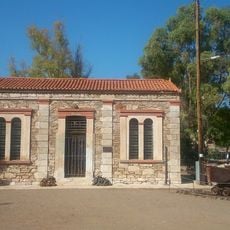
Access to the archaeological site is restricted to authorized archaeologists only, while general visitors can observe from outside a protective fence. The area remains actively excavated, so conditions may change depending on ongoing research activities.
The site revealed several clay ovens and the Depous amfikypellon, a distinctive tall vessel with two handles. This object demonstrates the specialized pottery techniques and technical knowledge of this Bronze Age community.
The community of curious travelers
AroundUs brings together thousands of curated places, local tips, and hidden gems, enriched daily by 94,337 contributors worldwide.