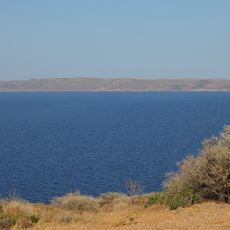
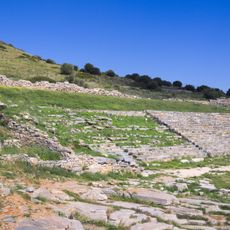
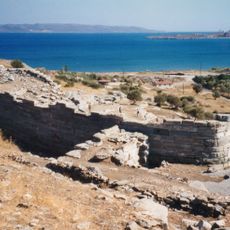
Temple of Poseidon at cape Sounion, Ancient Greek temple in Sounion, Greece.
The Temple of Poseidon is a Doric marble temple of 444–440 BCE, built on the ruins of an Archaic limestone predecessor. Its stepped platform of large rectangular blocks carries a row of six fluted columns with plain cushion capitals, a gap, three more columns supporting part of a horizontal beam, and a single separate column at the far right. The pale cream and grey marble is weathered and chipped, with dark streaks on the shafts.
The first temple here, built of tufa in the Archaic period, was probably destroyed in 480 BCE during Xerxes I's invasion. After the Battle of Salamis the Athenians dedicated a captured enemy trireme at the cape. The present marble temple was built between 444 and 440 BCE under Pericles, on the ruins of the earlier one.
Poseidon was called the "master of the sea", and the temple stood where ships nearing Attica could see it. After the naval Battle of Salamis the Athenians set up a captured enemy trireme here as a trophy for the god. Offerings found at the site point to visits by members of the elite.
The site can be reached by regular bus service from Athens and is open year-round with set hours. Wear comfortable shoes as the paths to the ruins are uneven and shade is scarce in the area.
Notable visitors have carved their names into the temple walls, including English poet Lord Byron who visited during his travels through Greece. These inscriptions show how the place has drawn travelers and artists across the centuries.
The community of curious travelers
AroundUs brings together thousands of curated places, local tips, and hidden gems, enriched daily by 92,959 contributors worldwide.