Hôtel-Dieu de Lyon, Former hospital in 2nd arrondissement, France
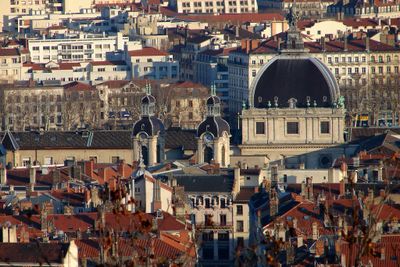
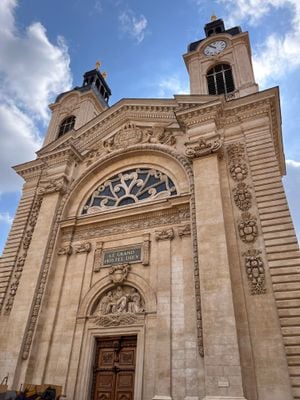
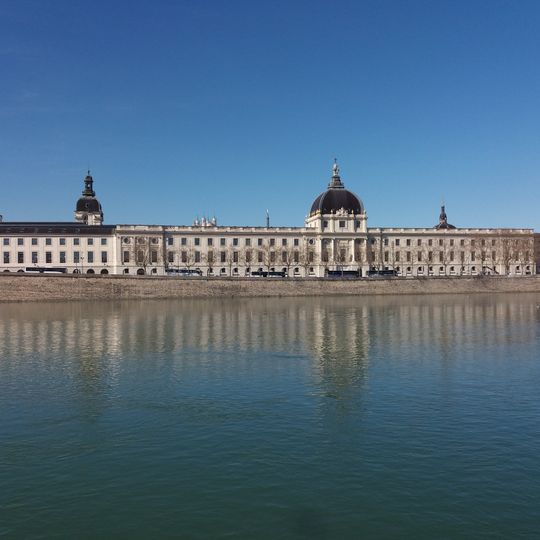
The Hôtel-Dieu de Lyon is a long neoclassical building on the west bank of the Rhône, its pale stone façade divided into bays by vertical strips, with rectangular windows and arched ground-floor openings. A large dark dome with a lantern and cross rises above the central section, flanked by smaller dark-roofed pavilions. Two smaller domed towers with clock faces stand on the main façade, and a row of statues runs along the base of the central dome.
Starting as a refuge for clergy in the 12th century, it became a medical facility in the 15th century when physicians were first hired. The current neoclassical form took shape in the 18th century under architect Soufflot, marking the building as a major center for medicine in Europe.
The name comes from the Latin hospitale, a guesthouse for pilgrims and the poor. The Confrérie des frères pontifes ran a pilgrims' house here from 1184–1185, and the first doctor, Maître Martin Conras, was hired in 1454. Today the former hospital houses shops, restaurants, the Cité de la gastronomie and an InterContinental hotel.
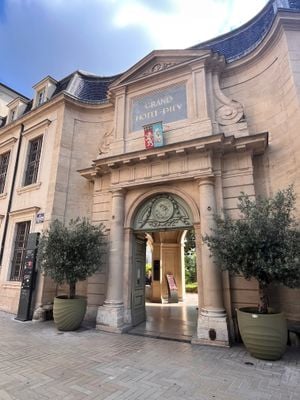
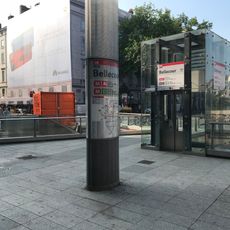
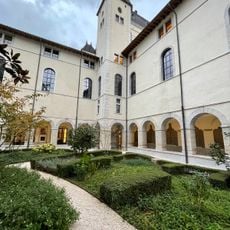
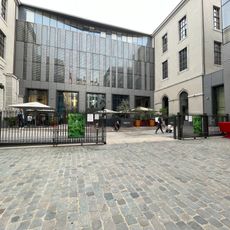
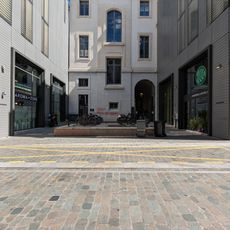
The complex is entered from the quai Jules-Courmont side facing the Rhône and from the rue de l'Hôpital side; the courtyards and ground-floor galleries connect the two. The Museum of the Civil Hospices of Lyon, tracing medicine from the Middle Ages, sits inside. The building is in the Bellecour district of the 2nd arrondissement, a short walk from Place Bellecour.
Inside is a working pharmacy museum containing hundreds of glass jars stored in mahogany cabinets, showing exactly how medicines were prepared in past centuries. This rare collection lets you understand the everyday work of apothecaries in ways rarely seen elsewhere.
The community of curious travelers
AroundUs brings together thousands of curated places, local tips, and hidden gems, enriched daily by 93,983 contributors worldwide.