Menez-Dregan, Paleolithic archaeological site in Plouhinec, France
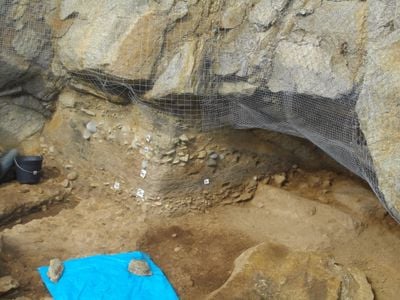
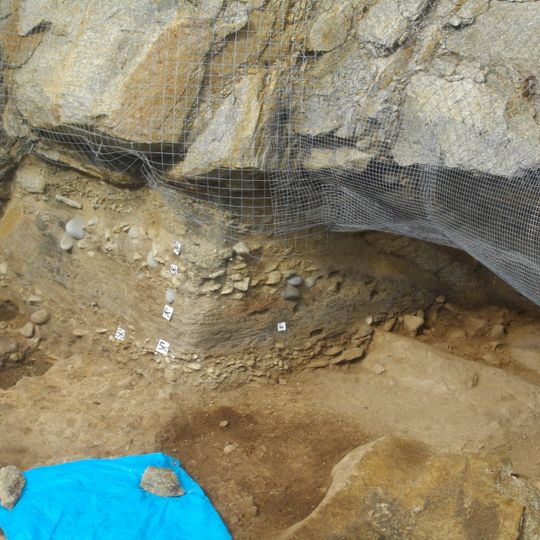
Menez-Dregan is a cave on the Breton coast where layers contain stone tools, bones from large animals, and charcoal remains. The layers show that people returned to this spot repeatedly over many thousands of years.
People first visited this cave around 460,000 years ago, making it one of the oldest known human sites in western Europe. The evidence shows that groups returned to shelter here over a span of several hundred thousand years.
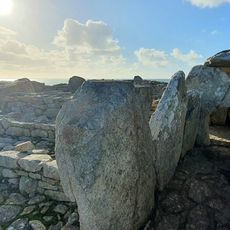
The name comes from Breton words meaning 'mountain' and 'thorn', reflecting the rocky coastal setting where the site sits. You can see how the cave nestles into the cliff face, making it an obvious shelter for people who lived here thousands of years ago.
A trail leads visitors along the coast to the cave with several stops that explain the site's story. The path is fairly easy to walk, but the coast is windy and can be wet, so wear sturdy shoes and bring weather-resistant clothing.
Excavations uncovered hundreds of stone tools and bone pieces, but what makes the site special is the discovery of charcoal fragments showing that people made fire here hundreds of thousands of years ago. These fire remains are valuable to science because they demonstrate early mastery of fire.
The community of curious travelers
AroundUs brings together thousands of curated places, local tips, and hidden gems, enriched daily by 90,995 contributors worldwide.