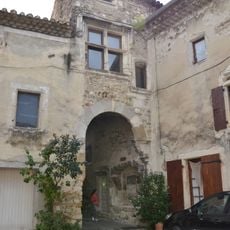
Aiguebelle Abbey, Trappist monastery in Montjoyer, France.
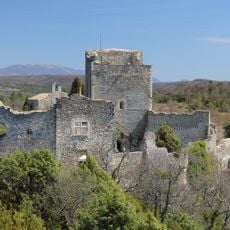
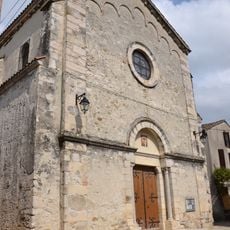
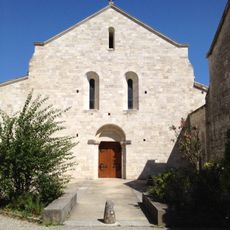
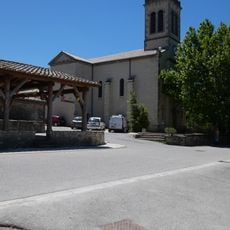
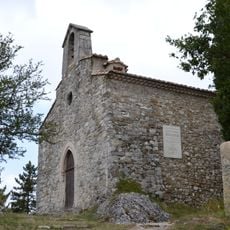
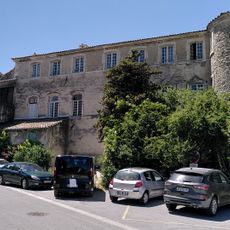
Aiguebelle Abbey is a Trappist monastery in the Romanesque style, set across the territories of Montjoyer and Réauville in the Drôme department of France. It is an active religious community, with a church, cloisters and stone buildings that monks continue to use for daily life and prayer.
A Benedictine monastery founded in 1045 by Hugues Adhemar, baron of Grignan, and visited by Pope Paschal II in 1107, stood here before falling into disuse. In 1137 Gontard Loup, lord of Rochefort-en-Valdaine, re-founded it as a Cistercian house settled from Morimond Abbey. It founded Fénier in 1167 and Le Bouchet in 1169, declined after the Black Death and the Hundred Years' War, passed to commendatory abbots in 1515, and was dissolved in 1791 with only three monks left. Trappists from La Valsainte in Switzerland, led by Père Étienne, refounded it in 1815.
The name Aiguebelle comes from aqua bella, referring to the purity of the water supply. The community has long combined prayer with manual work: monks made rosaries, brooms and wicker baskets, and a chocolate factory became the abbey's main industry until it moved to Donzère in 1895. In 2025, 22 Trappist monks aged 45 to 96 live here.
The abbey sits in a rural area and is easiest to reach by car, as public transport connections are very limited. A small shop run by the monks is open to visitors, making it the main point of contact with the community for most people who come.
The abbey keeps one of only two surviving lay-brothers' passages in France, the other at Fontfroide: a route letting lay brothers move between their quarters, workplaces and church without crossing the monks' area. In 1891 the procurator, Father Ildefonse, was murdered by a novice, Matthias Hadelt, who was guillotined at Valence on 5 July 1892.
The community of curious travelers
AroundUs brings together thousands of curated places, local tips, and hidden gems, enriched daily by 92,915 contributors worldwide.