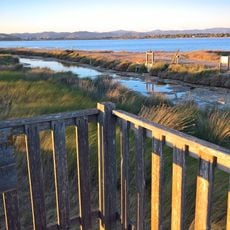
Giens Peninsula, Mediterranean peninsula in Hyères, France.
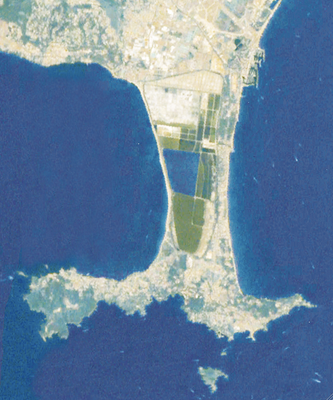
Giens Peninsula extends into the Mediterranean Sea through two sand strips that form a natural double formation, with the Pesquiers lagoon nestled between them. These twin spits of land developed through centuries of sand and sediment deposition.
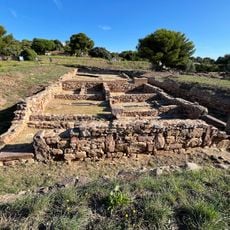
In antiquity Giens was one of the Stoechades islands, its sand bars still pierced by navigable channels. On the coast west of the western bar stood the Greek colony of Olbia, later a Roman town called Pomponiana, abandoned in the 7th century under King Guntram when the channels closed and barbarian invasions pushed residents up to Hyères. In 1220 the abbey of Saint-Pierre de l'Almanarre was founded on the site using its ancient stones.
The Pesquiers lagoon shaped the daily lives of local residents for generations as the region's economic center. Today, the abandoned salt ponds stand as a reminder of this close bond between the community and the sea.
The peninsula can be reached via two roads: the Salt Road and the Giens Road, though the Salt Road may close seasonally during winter. It helps to check accessibility before planning your visit.
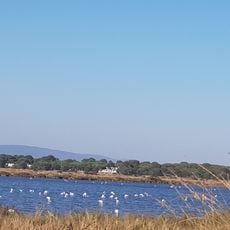
The lagoon between the two sand strips, the Étang des Pesquiers, is a stopover on bird migration routes and now holds a bird reserve. Until 1940 the peninsula and the Îles d'Or were the last mainland refuge in France of the Mediterranean monk seal, a species now critically endangered.
The community of curious travelers
AroundUs brings together thousands of curated places, local tips, and hidden gems, enriched daily by 93,859 contributors worldwide.