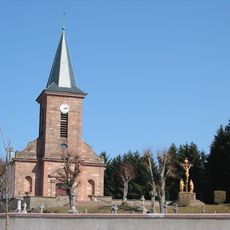
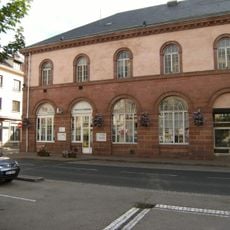
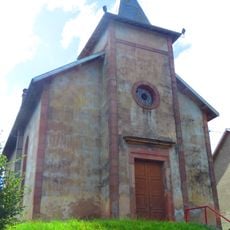
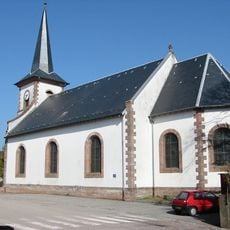
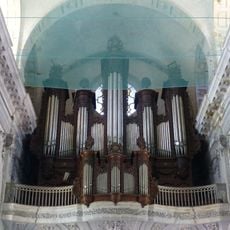
Abbaye Saint-Pierre d'Étival, Romanesque abbey in Étival-Clairefontaine, France.
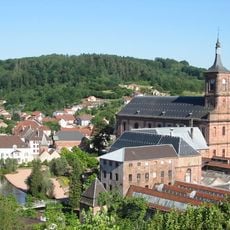
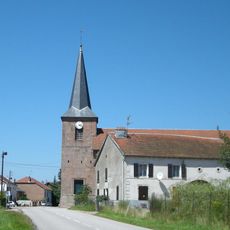
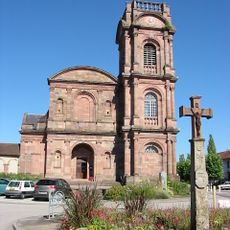
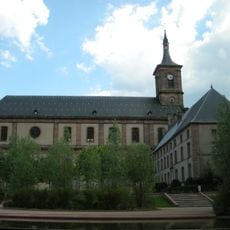
Abbaye Saint-Pierre d'Étival is a medieval monastery complex featuring a Romanesque church with later baroque additions. The site includes an 18th-century residence, a covered cloister walkway, and surrounding walls that define the compound's boundaries.
Leudinus Bodo, bishop of Toul, gave land around 650 for a Benedictine monastery in the Meurthe valley. In 880, King Charles the Fat granted it to his wife Richardis, who installed canons and placed it under Andlau Abbey in 881. In 1147, Premonstratensians from Flabémont took over. The abbey was dissolved in 1790, and German soldiers blew up the church on 9 November 1944.
The abbey's name comes from the Latin Monasterium Stivagium, and its church is dedicated to Saint Peter. The abbot was a vassal of the powerful abbess of Andlau and had to celebrate Mass there on the feasts of Saints Peter and Paul. The abbess retained the right to appoint the abbot until at least 1685.
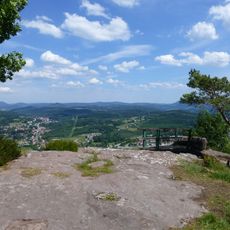
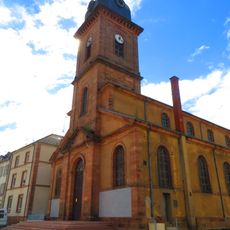
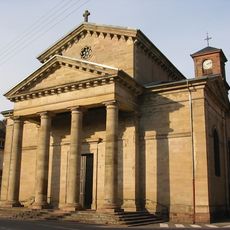
The abbey stands in the Meurthe valley at Étival-Clairefontaine, in the Vosges department of Lorraine, not Alsace. The parish church, classified since 1840, faces the street; the abbey house, cloister gallery and enclosing wall, listed in 1986, stand around the courtyard, where traces of the old moat defences remain. Several convent buildings are now houses, schools and stores and are not open to visitors.
German troops blew up the church on the evening of 9 November 1944, destroying its north tower. The architects left that tower in its ruined state and instead built up the south tower, which had stood only one storey high since the 18th century, following the proportions of the lost north tower.
The community of curious travelers
AroundUs brings together thousands of curated places, local tips, and hidden gems, enriched daily by 94,358 contributors worldwide.