Jardin d'agronomie tropicale, Tropical garden and research center in Bois de Vincennes, France
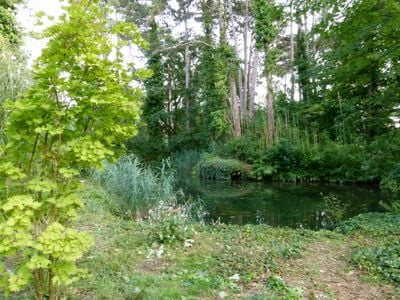
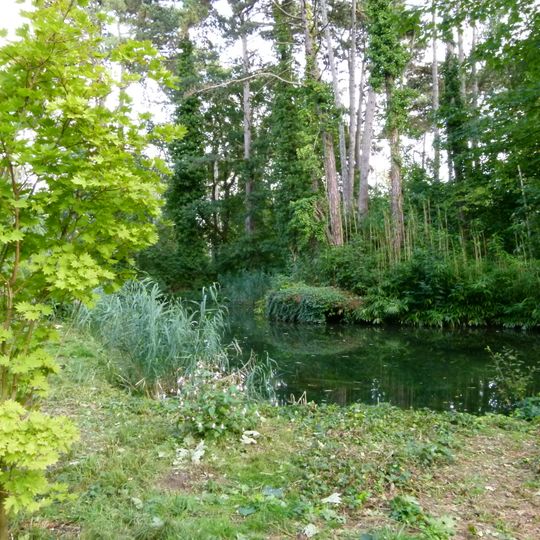
The Jardin d'agronomie tropicale René-Dumont occupies a flat 6.5-hectare site at the eastern edge of the Bois de Vincennes, with 4.5 hectares open to the public and the rest occupied by CIRAD. Its vegetation is mainly native to the Île-de-France, with a few surviving tropical species such as bamboo, latex trees and persimmons. A small artificial pond in the north drains through an artificial stream. Buildings from the 1907 colonial exhibition punctuate the grounds, including a Chinese gate, a Khmer bridge and a Tonkinese bridge.
The garden was created in 1899 as a research center for tropical agriculture to study plants and farming methods from distant regions. It later became the setting for the Colonial Exhibition of 1907, when it shared its collections and knowledge with the public.
The site displays structures from different cultures, including a Vietnamese temple and a Tunisian house that still stand today. These buildings tell the story of how people once imagined and represented distant lands in their own city.
The only entrance is on the south-east side, on avenue de la Belle-Gabrielle. The nearest RER station is Nogent-sur-Marne (line A), 400 m to the north-east; Château de Vincennes metro station (line 1) is over 2.5 km to the north-west. Of the roughly 6.5 hectares, 4.5 are open to the public, the rest occupied by the CIRAD research centre.
The garden's oldest glasshouse, the small Serre du Dahomey, came from the 1900 Trocadéro exhibition after industrialists Meunier and Hamelle donated glasshouses; the garden's own greenhouses were built between 1899 and 1972. Five statues from Jean-Baptiste Belloc's monument to colonial expansion lie on the ground near the entrance.
The community of curious travelers
AroundUs brings together thousands of curated places, local tips, and hidden gems, enriched daily by 93,468 contributors worldwide.