Bibracte, Archaeological site on Mount Beuvray, France
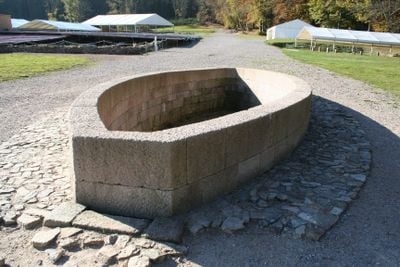
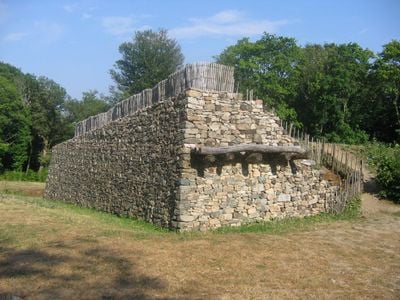
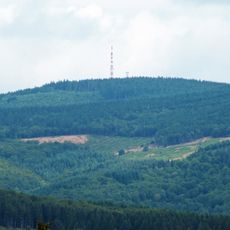
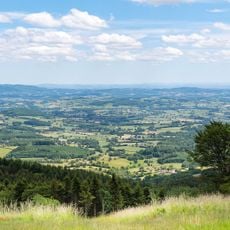
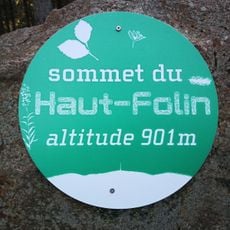
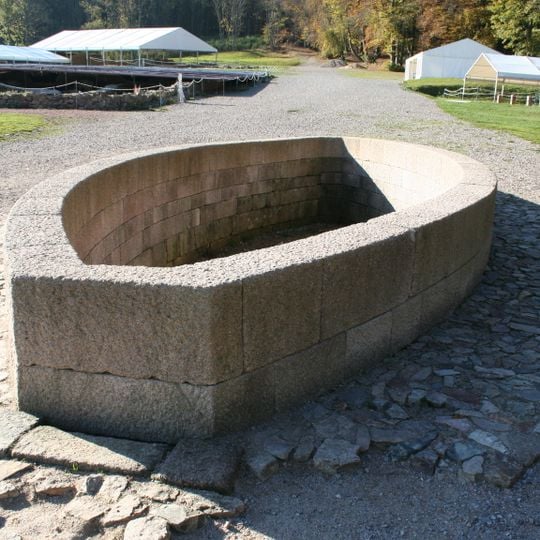
Bibracte is a Gallic oppidum on Mont Beuvray, spread over 135 hectares across the Nièvre and Saône-et-Loire départements. Its ramparts of the Murus Gallicus type, faced with stacked rectangular blocks of grey and tan stone, enclosed the settlement; the excavated interior has yielded streets, dwellings and workshops. The site lies in the Morvan, at the confluence of the Yonne, Saône and Loire basins, and its summit, the Porrey, is the highest point.
Bibracte was the capital of the Aedui, a Gallic people of the La Tène culture, and flourished in the 1st century BC. In 52 BC Vercingetorix was proclaimed head of the Gaulish coalition there. A few decades after the Roman conquest, its inhabitants moved to Augustodunum, modern Autun, about 25 km away, and the site was abandoned.
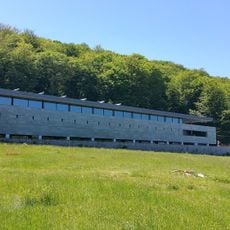
The name Bibracte likely comes from the Gaulish word for beaver, *bibro-*, with the collective suffix *-akti*, giving "the set of beavers"; the medieval forms Buvrait and Beuvray descend from it. The Museum of Celtic Civilization, opened on the site, presents the finds from the excavations of Mont Beuvray and the daily life of the oppidum.
The site provides 15 kilometers of marked walking paths that visitors can explore with an interactive mobile application. The app displays the layout of the ancient city as you walk, making navigation straightforward.
Bibracte is mentioned only twice in Roman sources, both times by Julius Caesar: in 58 BC during the Battle of Bibracte and in 52 BC, when Vercingetorix was proclaimed head of the Gaulish coalition here. The site was then forgotten until Jacques-Gabriel Bulliot began excavations in 1867.
The community of curious travelers
AroundUs brings together thousands of curated places, local tips, and hidden gems, enriched daily by 93,643 contributors worldwide.