Saint-Pol-de-Léon Cathedral, Gothic cathedral in Saint-Pol-de-Léon, France
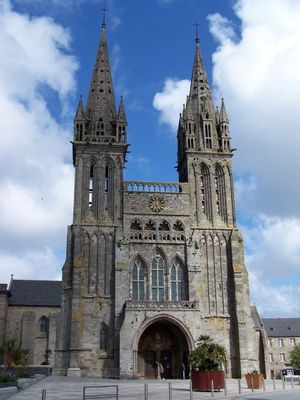
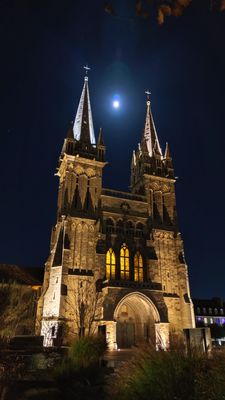
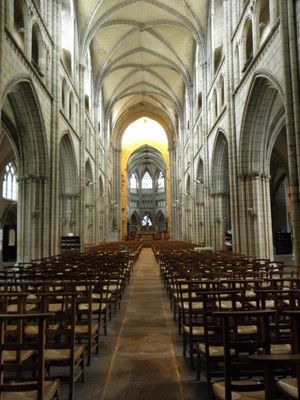
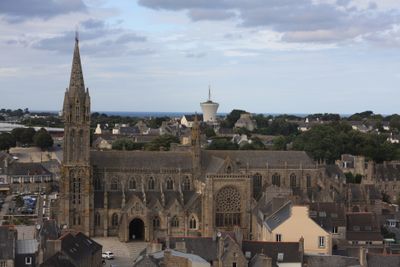
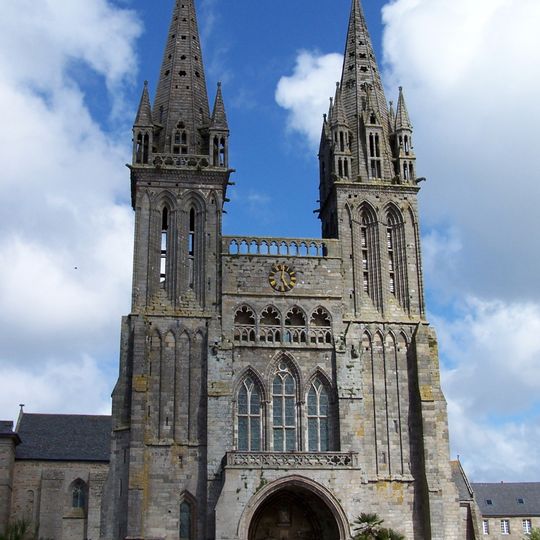
Saint-Pol-de-Léon Cathedral has a west facade of two polygonal, unequal towers rising close to 50 metres, each capped by a slender spire. Between them a round clock face with gold numerals sits above three arched windows and a large pointed-arch portal, with a band of small columns and a balustrade crossing the middle. The nave and facade are built of Caen limestone, while the choir is granite; the vaults rise 16 metres and the building is 80 metres long.
Construction of the cathedral began in 1230 following destructions from Danish raids in 875 and English forces under King Henry II in 1170. The Gothic style was chosen to rebuild a monumental and lasting house of worship after these devastating attacks.
The cathedral houses a collection of skull boxes reflecting a Breton practice of keeping remains of the deceased within religious spaces. This custom shows how local burial traditions shaped the use of the building over centuries.
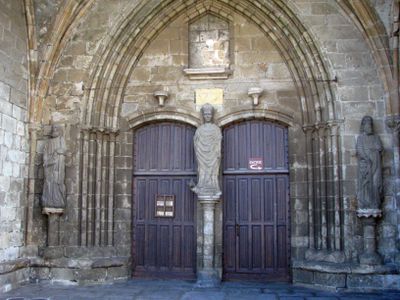
The west front opens onto the Place du Parvis, where the two spires and the clock can be seen from below; the south porch, with its carved statues, is the usual way in. Inside, look for the two stoups near the south door and the 11th-century sarcophagus beside them. The building is a working basilica, so visits may be interrupted during services.
The Great Organ was built between 1657 and 1660 with 2118 pipes and represents one of the oldest surviving musical instruments in Brittany. This organ still sounds during special services today, showing the musical importance the cathedral has held for centuries.
The community of curious travelers
AroundUs brings together thousands of curated places, local tips, and hidden gems, enriched daily by 93,380 contributors worldwide.