Fort de Joux, Medieval fortress in La Cluse-et-Mijoux, France
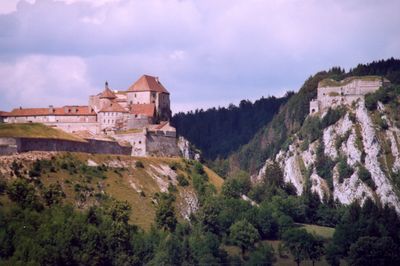
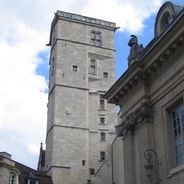
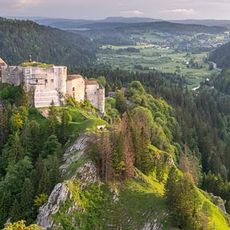
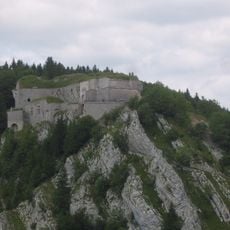
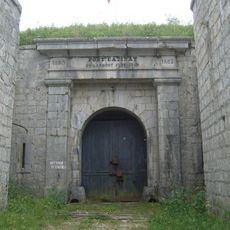
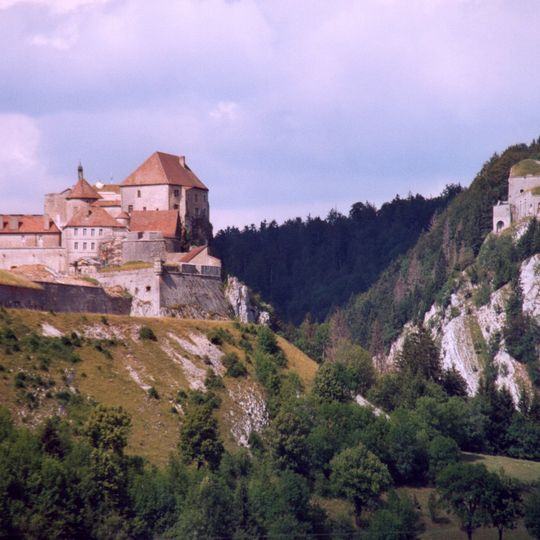
Fort de Joux stands on the Pelouse plateau above the Cluse de Pontarlier, not in a valley floor. Its successive enceintes climb the slope: a long low range with a red-tiled roof ends at a square tower, and behind it rises the main block with a steep hipped roof. Massive grey retaining walls step down the hillside toward the wooded valley.
The fortress was built in the 11th century as a simple wooden structure and was reinforced over the centuries by different rulers, including Philip the Good and the military engineer Vauban. It evolved from a border stronghold into a political prison.
The fort held prisoners for successive French governments from the 17th to the 19th century. Its best-known captive is Toussaint Louverture, leader of the Haitian Revolution, who died there on 7 April 1803; Mirabeau and Heinrich von Kleist were also imprisoned. The name Joux appears in charters as Miroaltum (1039) and Miroaz (1227).
The fort is best explored on foot since paths are narrow and steep with many stairs throughout the layout. It is recommended to wear comfortable shoes and allow time to navigate the different levels and interconnected areas.
The well inside the fort was once 147 metres deep, the deepest in France. It was cut with a horizontal gallery and is partly filled, so it now measures about 101 metres and ranks third in the country.
The community of curious travelers
AroundUs brings together thousands of curated places, local tips, and hidden gems, enriched daily by 93,736 contributors worldwide.