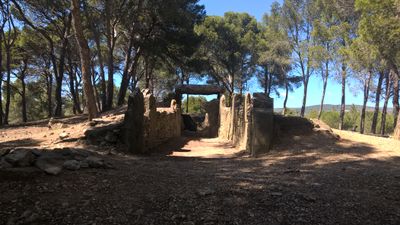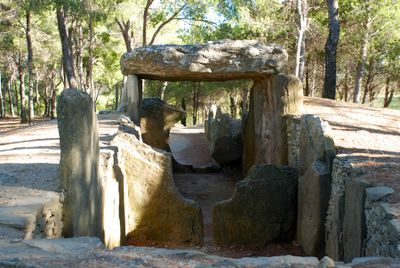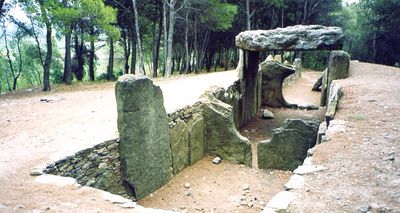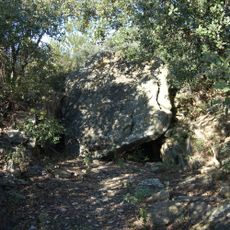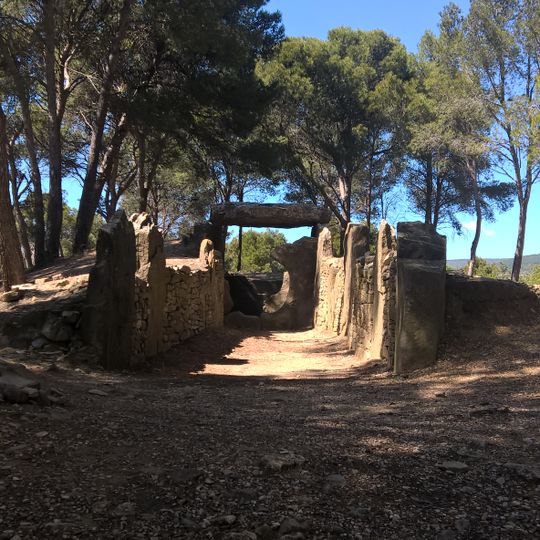
Dolmen Lo Morrel dos Fados, Neolithic dolmen in Pépieux, France.
Dolmen Lo Morrel dos Fados is a 24-metre passage grave in a 35-metre tumulus, divided into a 12-metre corridor, a 6-metre antechamber and a burial chamber. The antechamber is roofed by a single limestone slab weighing 25 to 30 tonnes, and two holed slabs form doors between the sections.
The structure was built around 3500 BC by the Véraza culture, who transported massive stones from distant locations. This effort reflects how much early communities invested in creating permanent resting places for their dead.
The name comes from Occitan: "lo morrèl" means hill and "las fadas" means fairies, so the monument is the fairies' hill. Local tradition also calls it Palet de Roland, after Roland, Charlemagne's nephew, who was said to have left the mark of his hand here. The cover slab of the antechamber, 4.50 m long and weighing 25 to 30 tonnes, rests on uprights.
The site is open year-round with no entrance fee, allowing you to explore at your own pace. The enclosed area is compact and easy to walk around, making it simple to see everything on offer.
The cover slab over the antechamber, a nummulitic limestone block weighing 25 to 30 tonnes, was brought from the Causse de Siran more than 3 km away. The 1993 excavation also found a broken sandstone monolith 3.98 m long on the tumulus's north flank, perhaps an old pillar or marker stone.
The community of curious travelers
AroundUs brings together thousands of curated places, local tips, and hidden gems, enriched daily by 94,019 contributors worldwide.