Château de Sassenage, Classified historic monument in Sassenage, France
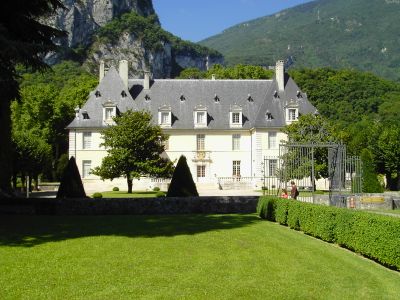
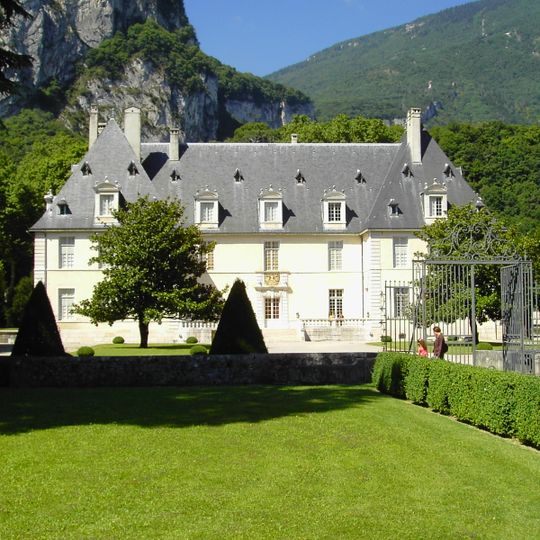
Château de Sassenage is a three-storey classical château built from 1662 to 1669 by Laurent Sommaire for Charles-Louis-Alphonse de Sassenage, using limestone from Sassenage, l'Echaillon and Fontanil plus Voreppe molasse for the staircase. Its pale facade has two projecting wings with triangular pediments and tall chimneys, a steep slate roof from Besse-en-Oisans pierced by rounded dormer windows, and a carved pediment showing the fairy Mélusine and the family coats of arms. Inside are a stone staircase with balustrades and arcades, a vaulted kitchen arranged around a fireplace, and Louis XVI woodwork in the salon de compagnie.
Construction took place between 1662 and 1669 under the direction of architect Laurent Sommaire, replacing an earlier 13th-century fortress at the entrance of the wooded estate. This rebuilding represented a shift from medieval defensive structures to a classical residential dwelling.
The château keeps its furniture and decor in place since the end of the Ancien Régime, among the few French castles to do so. Two paintings by Louis Cretey hang in the rooms, and the Louis XVI woodwork of the salon de compagnie was stripped of yellowed varnish to reveal its original paint. A carved pediment shows the fairy Mélusine with the Sassenage coats of arms.
Guided tours run only during certain periods of the year, so check opening times before travelling. The eight-hectare park, the buildings and the chestnut avenue leading to the estate are classified historical monuments. The château lies near the centre of Sassenage, close to the Sassenage caves and below the Les Côtes-de-Sassenage area, on the road from Grenoble to Valence. The grounds can also host events, including conferences for up to 130 people and receptions for 30 to 250.
The sculpted pediment above the facade shows the fairy Mélusine beside the coats of arms of the Sassenage family, a legendary ancestress the house claimed descent from. The slate of the roof came from Besse-en-Oisans and the tiles from Saint-Quentin-sur-Isère, materials drawn from villages of the Dauphiné.
The community of curious travelers
AroundUs brings together thousands of curated places, local tips, and hidden gems, enriched daily by 94,226 contributors worldwide.