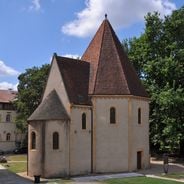
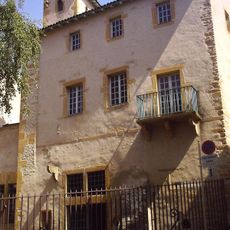
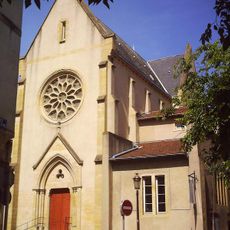
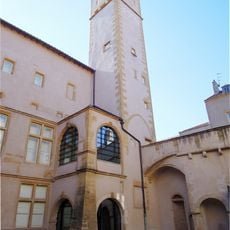
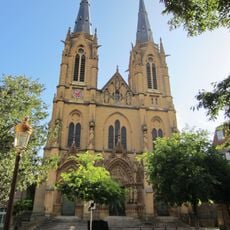
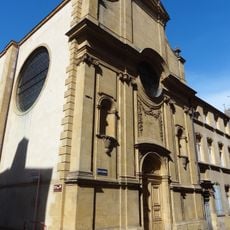
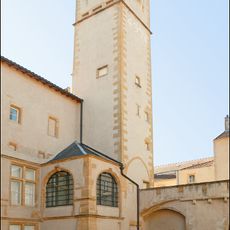
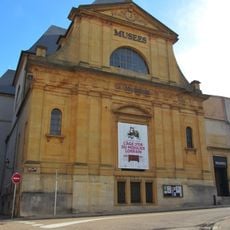
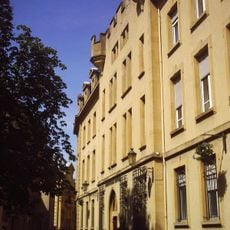
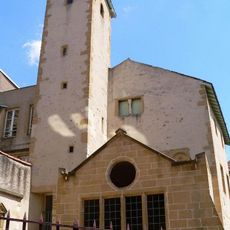
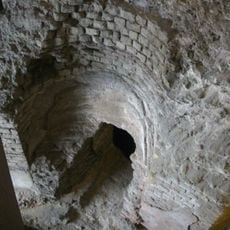
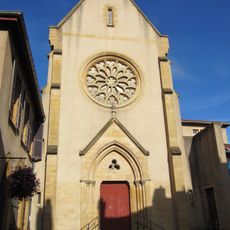
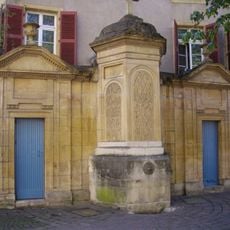
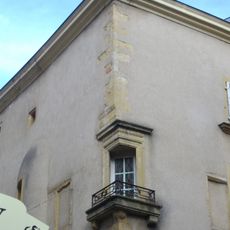
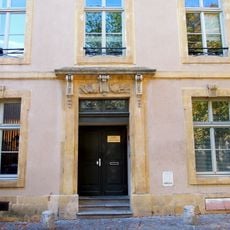
Couvent des Récollets de Metz, Medieval cloister at Sainte-Croix hill, Metz, France.
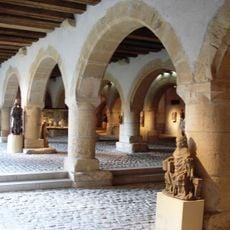
The Couvent des Récollets is a cloister with three Gothic galleries arranged around a central garden with a stone well. The wooden ceilings and layout reflect the regional building style of the area.
The Cordeliers founded the cloister in 1230, and the Recollets took over in 1602 until the French Revolution changed its purpose. This long history of religious use shaped the building we see today.
The name Récollets refers to the Franciscan reform branch that occupied the convent from 1602 until the Revolution. In the cloister walls are embedded funerary slabs and a gisant, while columns with floral carving, probably from the former chapel, stand isolated in the gardens. A mural of the Annunciation painted in the 1330s–40s was found in 1975 in a niche of the west wall, later enlarged as the burial recess of Jean Braidy, who died in 1373.
The cloister stands in the Ancienne Ville near the hill of Sainte-Croix, and the door onto the rue des Murs survives from the 17th-century reworking. The site now houses the European Institute of Ecology and the municipal archives, so the galleries are working spaces rather than a museum circuit. The garden is reached through the wider middle bay of the arcade.
The wall painting of the Annunciation, made around 1330–40, was found in 1975 in a niche of the cloister's western wall. The niche was later enlarged to form the burial recess of Jean Braidy, who died in 1373.
The community of curious travelers
AroundUs brings together thousands of curated places, local tips, and hidden gems, enriched daily by 93,957 contributors worldwide.