Fort de Roppe, Military fortress in Belfort, France
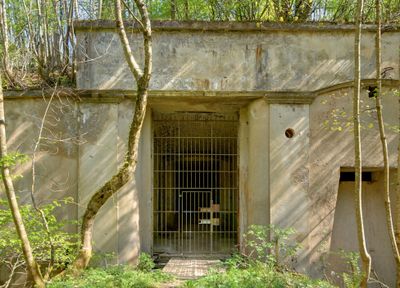
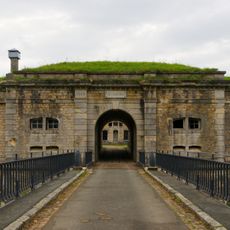
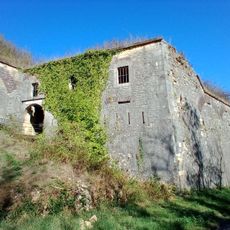
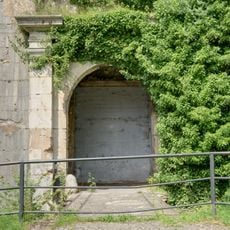
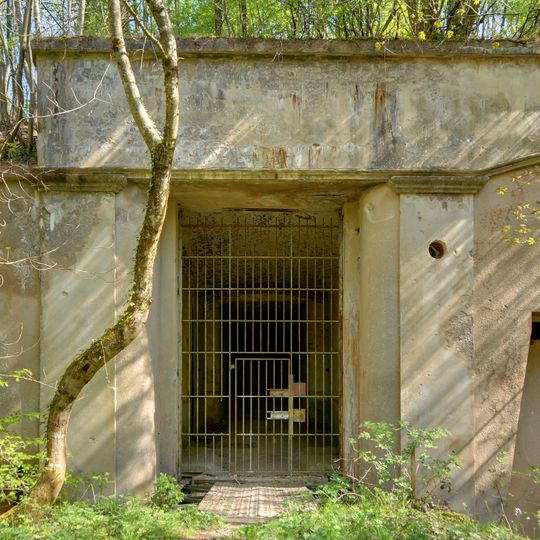
Fort de Roppe is a Séré de Rivières fort on a 511-metre hill near Roppe, north of Belfort, entered by a drawbridge. Its rectangular rampart encloses a peacetime barracks, a concrete wartime barracks of 646 places, a Bourges casemate, machine-gun turrets and a 155R 1907 turret. A concrete entrance block with a barred metal gate stands at the approach.
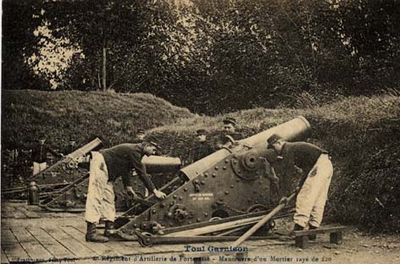
Built from 1 January 1875 to 31 December 1877 as part of the Séré de Rivières fortifications around Belfort, the fort was briefly named Fort Ney by ministerial decree on 21 January 1887 under Georges Boulanger; his successor Théophile Ferron reversed this on 13 October 1887. From 1893 it was linked to other Belfort forts by a strategic railway, and between 1905 and 1910 it received a concrete barracks for 646 men, a Casemate de Bourges and machine-gun turrets.
The fort demonstrates French engineering knowledge from the 1800s and how builders understood defense at that time. You can see the choices made about which locations mattered most and how soldiers were meant to work together there.
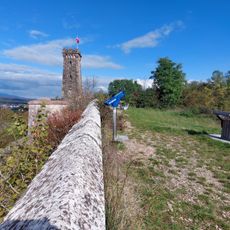
The fort stands on a summit at 511 metres and can only be entered by a drawbridge at the main entrance. It is still used by the army to train new recruits, so access inside is not open to visitors; the concrete entrance block and gate can be seen from the approach path near Roppe.
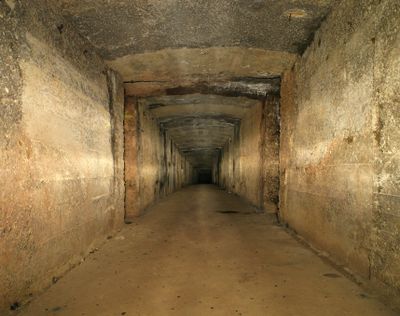
During World War I, a network of galleries was dug 17 metres below the fort and concreted between the wars, linking various points to an underground barracks. In the interwar years the south-east counterscarp gallery exploded because of the ammunition stored there; it was never repaired, and a detached gallery was built in front of it to defend the ditch.
The community of curious travelers
AroundUs brings together thousands of curated places, local tips, and hidden gems, enriched daily by 93,721 contributors worldwide.