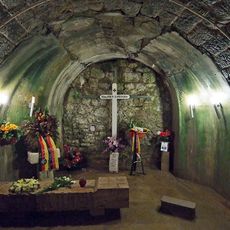
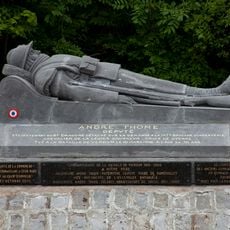
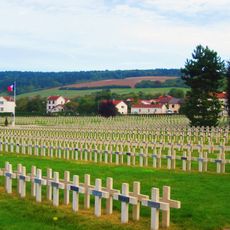
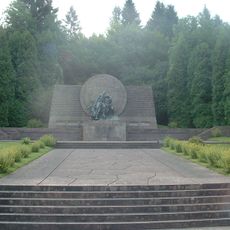
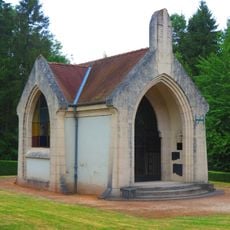
Ouvrage de Froideterre, Military fortress in Bras-sur-Meuse, France.
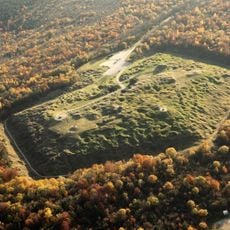
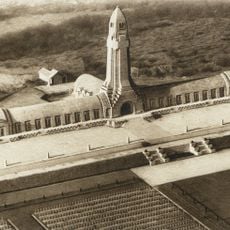
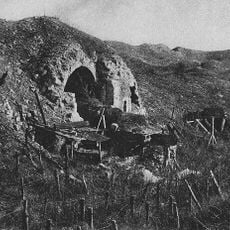
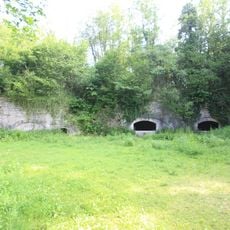
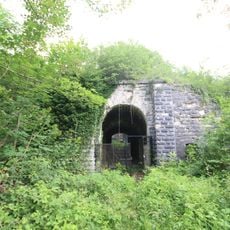
Ouvrage de Froideterre is an interval fortification on the southwestern slope of the Côte de Froideterre, straddling the communes of Fleury-devant-Douaumont and Bras-sur-Meuse. Its 280-by-200-metre enclosure is surrounded by a ten-metre-wide, five-metre-deep ditch. A 60-metre barracks, covered by 1.80 metres of reinforced concrete and 1.40 metres of earth, housed 142 men. Two 75 mm guns in a twin turret and a Bourges casemate remain visible.
The fortress was constructed from 1887 to 1888 as part of France's regional defense system. It endured German assaults during the Battle of Verdun in 1916 and stayed in French hands throughout the fighting.
The name Froideterre ("cold earth") comes from the slope the work was built on, on the boundary between Fleury-devant-Douaumont and Bras-sur-Meuse. The 23 June 1916 assault by Bavarian troops of the 10th Regiment was halted when the artillery turret fired its whole stock of 116 canister rounds around itself. The work is signposted in the Champ de Bataille and its surface can be walked freely.
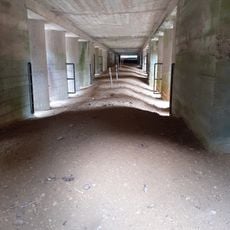
The ouvrage is signposted within the Champ de Bataille and can be reached on foot or by vehicle. Visiting requires a permit or a guided excursion; the above-ground parts are freely accessible. The deep tunnel system has been closed with steel sections since the 1990s to protect a bat colony.
The deep tunnel system dug after 31 May 1916 to link the fighting compartments is closed by steel sections because of a bat colony, and has been off-limits since the 1990s. Above ground, the two observation armoured cupolas (Observatoire cuirassé) installed in the western flank still stand.
The community of curious travelers
AroundUs brings together thousands of curated places, local tips, and hidden gems, enriched daily by 93,646 contributors worldwide.